
Below The Hook
Rigging fundamentals are central to lift safety and performance
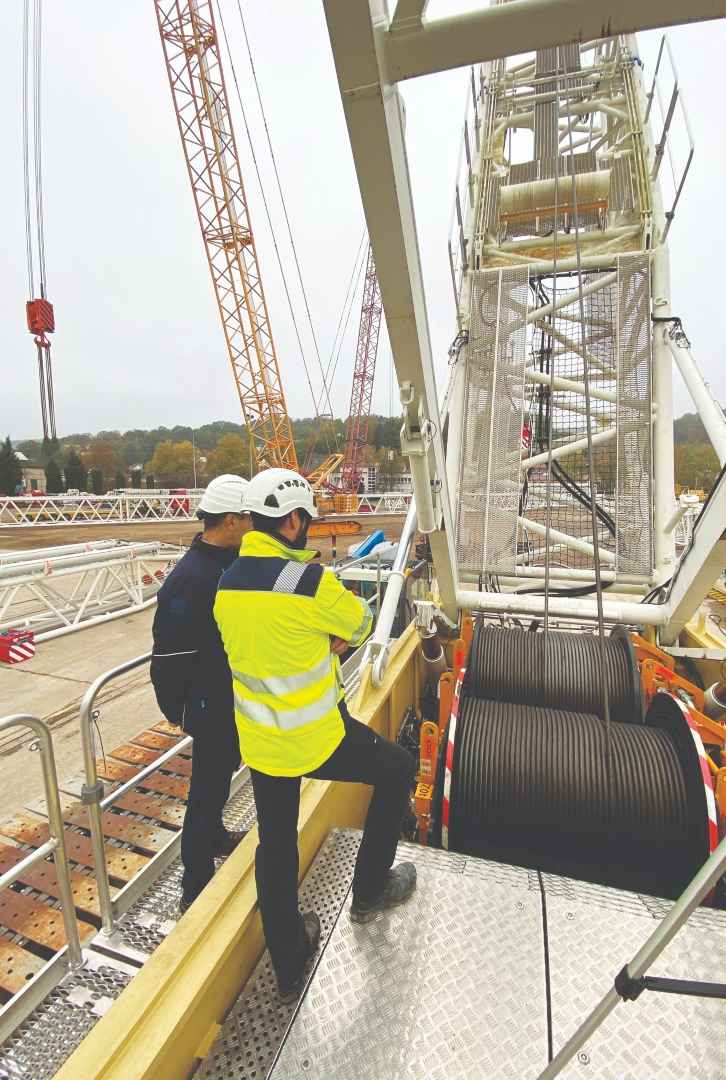
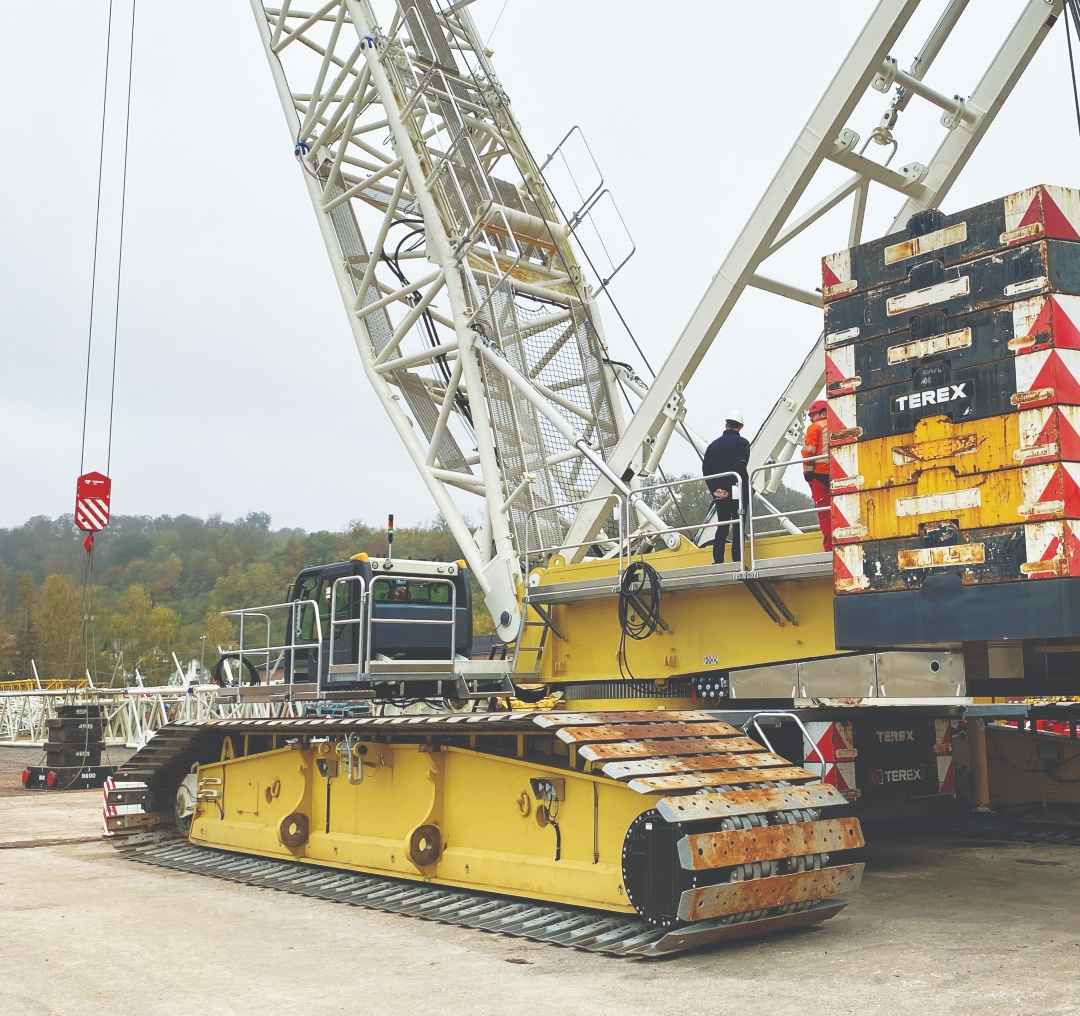
In lifting operations, attention is often directed toward crane capacity, configuration, and reach, as these parameters define capability under controlled conditions. On site, however, the outcome of a lift is shaped by how loads are rigged, balanced, and controlled below the hook, where forces are introduced into the system and begin to develop. The crane responds to those forces, but it does not define them. This becomes critical when real conditions differ from planning assumptions.
Lifting incidents typically develop from small deviations in setup and execution that become significant once the load is applied. Sling configuration, load balance, and equipment condition may appear acceptable during preparation, yet these same factors determine how forces develop as the load leaves the ground.
On many jobsites, these decisions are made under time constraints or physical limitations, increasing the likelihood that small inaccuracies carry through into the lift. Once the load is suspended, correcting these conditions becomes more difficult, and the system must respond to forces that were introduced at the start of the operation.
Real Conditions
Rated capacity is established under defined conditions and does not account for how loads are rigged in the field. Sling configuration, hitch type, and geometry determine how load is transferred through the system. Sling angle has a direct effect on tension, and as the angle between the sling and the horizontal decreases, the force in each leg increases. Sling angles are always measured from the horizontal, and small changes in angle can have a significant impact on loading.
This relationship between angles and tension can be expressed through basic rigging calculations:
- At 60 degrees, forces remain relatively controlled.
- At 45 degrees, tension increases significantly.
- At 30 degrees, the tension in each sling leg can equal the full load, effectively doubling the expected force in a two-leg configuration.
In addition to vertical loading, shallow sling angles also introduce inward forces on connection points. These collapse forces increase as angles decrease and can place additional stress on hardware, attachment points, and the load itself. Both tension and compression must be considered when evaluating rigging configurations.
In field conditions, sling angles are often adjusted to accommodate obstructions, limited headroom, or fixed lifting points. These adjustments change how forces are distributed, even when the load weight remains constant. A configuration that appears stable may introduce significantly higher stress into the rigging system than expected based on rated capacity alone.
Hitch selection further influences performance. Choker hitches reduce effective capacity due to the way the sling is bent and loaded. In typical applications, a choker hitch may only achieve approximately 75 to 80% of the single-leg capacity, and improper positioning can reduce this further. If the choke angle is not properly set or the sling is not seated correctly, capacity can be reduced significantly, and the load may shift during lifting.
Multi-leg sling systems introduce additional variability. Load sharing depends on equal sling length, consistent spacing, and correct alignment with the center of gravity. When one leg is shorter or positioned closer to the center of gravity, it carries a greater portion of the load.
In some configurations, load distribution can be highly uneven. For example, a sling attached at approximately 25% of the distance from the center of gravity may carry as much as 75% of the load, while other legs remain lightly loaded. This uneven distribution increases localized stress and reduces the margin between applied force and allowable capacity.
Rated load itself is based on a design factor, which provides a margin between working load and breaking strength. For many slings, this factor is typically in the range of five to one, depending on sling type, meaning the rated load is significantly lower than the ultimate strength of the material. Improper rigging can quickly reduce this margin.
Loads Under Lift
Load behavior during lifting is governed by the center of gravity, which determines how the load will align when suspended. As the load is lifted, it will move until equilibrium is reached beneath the lifting point. If rigging is not positioned correctly relative to this center, the load will shift during lifting, redistributing forces across the sling legs.
Differences in attachment point location, sling length, or spacing influence how load is shared once the system stabilizes. These variations may not be obvious during setup, yet they become critical once the load is fully suspended. In multi-leg configurations, even small inconsistencies can result in one leg carrying a disproportionate share of the load.
Dynamic conditions introduce additional forces beyond static calculations. Sudden lifting, stopping, or changes in direction create transient forces that increase stress within the system. These forces can exceed calculated values and contribute to wear in slings, hardware, and crane components. Over time, repeated exposure to dynamic loading reduces service life and affects reliability.
Maintaining control during lifting limits these effects. Taglines are used to guide load movement and maintain orientation, particularly when handling long materials, working in wind, or operating in confined spaces. Taglines should be long enough to maintain control while avoiding entanglement risks, and they should never be wrapped around the body.
Protection of rigging equipment is also critical. Slings that contact edges, corners, or abrasive surfaces must be protected to prevent damage. Without proper protection, slings can experience immediate degradation, particularly synthetic slings, resulting in a rapid loss of capacity.
Competence and Execution
Lifting operations are governed by established standards that define requirements for equipment, inspection, and execution. These standards provide a structured framework for safe practice, but their effectiveness depends on how consistently they are applied in the field.
Competence requires an understanding of how rigging decisions affect force distribution and system behavior. Personnel involved in lifting must be able to interpret conditions and apply appropriate configurations based on load characteristics and environment. This includes understanding how geometry influences tension, how load shifts affect balance, and how equipment condition impacts performance.
Safe lifting depends on coordination and communication between defined roles that establish responsibility within lifting operations:
- The rigger is responsible for selecting and configuring equipment, ensuring proper attachment, and verifying load weight and center of gravity.
- The operator controls load movement and must understand how rigging affects crane response.
- The lift director oversees the operation, confirms load information, and has the authority to stop the lift if conditions are unsafe.
- The supervisor ensures that site conditions and procedures support safe execution.
Lifting operations follow a structured sequence intended to control how forces are introduced into the system. The process begins with accurate load assessment, including weight, dimensions, and all rigging components. The correct sling and hitch must be selected based on the application.
All equipment must be inspected before use. This includes verifying identification tags, rated capacity, and overall condition. Slings with missing or illegible identification, broken wires, excessive wear, deformation, corrosion, or other visible damage must be removed from service.
The load must be properly rigged and balanced relative to its center of gravity. A test lift allows verification of stability before the full lift is performed. During the lift, steady and controlled movement reduces dynamic effects, while personnel must remain clear of suspended loads and pinch points. After completion, equipment should be inspected again and returned to proper storage.
Inspection occurs at multiple stages, including initial verification, frequent inspection before each lift or shift, and periodic inspection based on service conditions. Equipment used in severe environments or high duty cycles requires closer monitoring. Effective inspection requires full visibility of the sling and an understanding of removal criteria, including conditions such as broken wires, metal loss, distortion, heat damage, or missing identification.
Rigging decisions influence both safety and long-term system performance. Uneven loading, increased tension, and repeated dynamic forces contribute to wear in slings, fittings, and crane ropes. Over time, these effects reduce reliability and increase maintenance requirements.
Crane capacity defines theoretical capability, but it does not determine how forces are introduced into the system. That responsibility lies below the hook. Sling configuration, hitch selection, load balance, and execution all shape how loads behave in real conditions.
When these factors are properly managed, lifting operations remain controlled, predictable, and efficient. When they are not, even small deviations can escalate into significant risk. Safe lifting and consistent system performance depend on understanding and managing the forces introduced at the start of the operation.
Timothy Klein PE, is the senior principal engineer, global lifting and fabrication at WireCo, the manufacturer of wire and synthetic rope for crane lifting applications.