Better Solution
Self-erecting cranes are delivering on space-constrained jobsites

It’s the perfect scenario for self-erecting cranes. “Jobsites are getting tighter in terms of set-up areas available for equipment,” said Paul Autry, national sales and marketing director at Uperio USA/Compass Equipment, a Uperio Group Company. “Contractors who have typically used forklifts, telehandlers and mobile crane strategies are discovering that self-erecting tower cranes can increase efficiency, safety and overall performance, making them a solution with a better ROI.”
Remi Deporte, self-erecting cranes product manager at Manitowoc, pointed out that increasingly demanding lifting requirements and tight project schedules are driving demand for self-erecting cranes that maximize mobility and access while delivering strong load charts and greater height under hook.
“One of the most common customer requirements is the ability to install self-erecting cranes on very narrow and congested jobsites,” Deporte also said. “Access to the site is often the first challenge, making compact transport dimensions a critical consideration, and that is exactly where self-erecting cranes excel.”
According to Autry, focused infrastructure plans aimed at increasing new construction and refurbishment projects for manufacturing, multi-residential and mixed-use developments are driving factors in self-erecting crane growth. “The market is gaining momentum in 2026,” he said, “setting the stage for stronger third and fourth quarters this year, and a strong showing in 2027.”
As labor challenges persist, equipment that can be set up and operated by smaller crews will remain in high demand, noted Christopher Noblit, VP sales, tower cranes North America at Manitowoc. “At the same time, growing pressure to reduce project timelines is encouraging contractors to adopt equipment that streamlines jobsite operations,” he said, “while the increasing use of modular and prefabricated construction methods is also creating new opportunities for self-erecting cranes.
“In addition, urban construction activity continues to expand, driving demand for cranes that can operate effectively on tight jobsites,” Noblit continued. “We expect the market to continue experiencing steady growth over the next several years, driven by broader trends across the construction industry.”
Advanced Offerings
Manufacturers are also developing and introducing technologies and their newest models. Potain’s latest self-erecting cranes, for example, offer hydraulic outriggers and wireless remote control with real time wind speed, radius, hook height, load and moment indicators.
Also available from Potain is Top Zone, a smart anti-collision and load monitoring system designed to enhance safety and efficiency on construction sites. Top Zone works in conjunction with the crane’s load monitoring system.
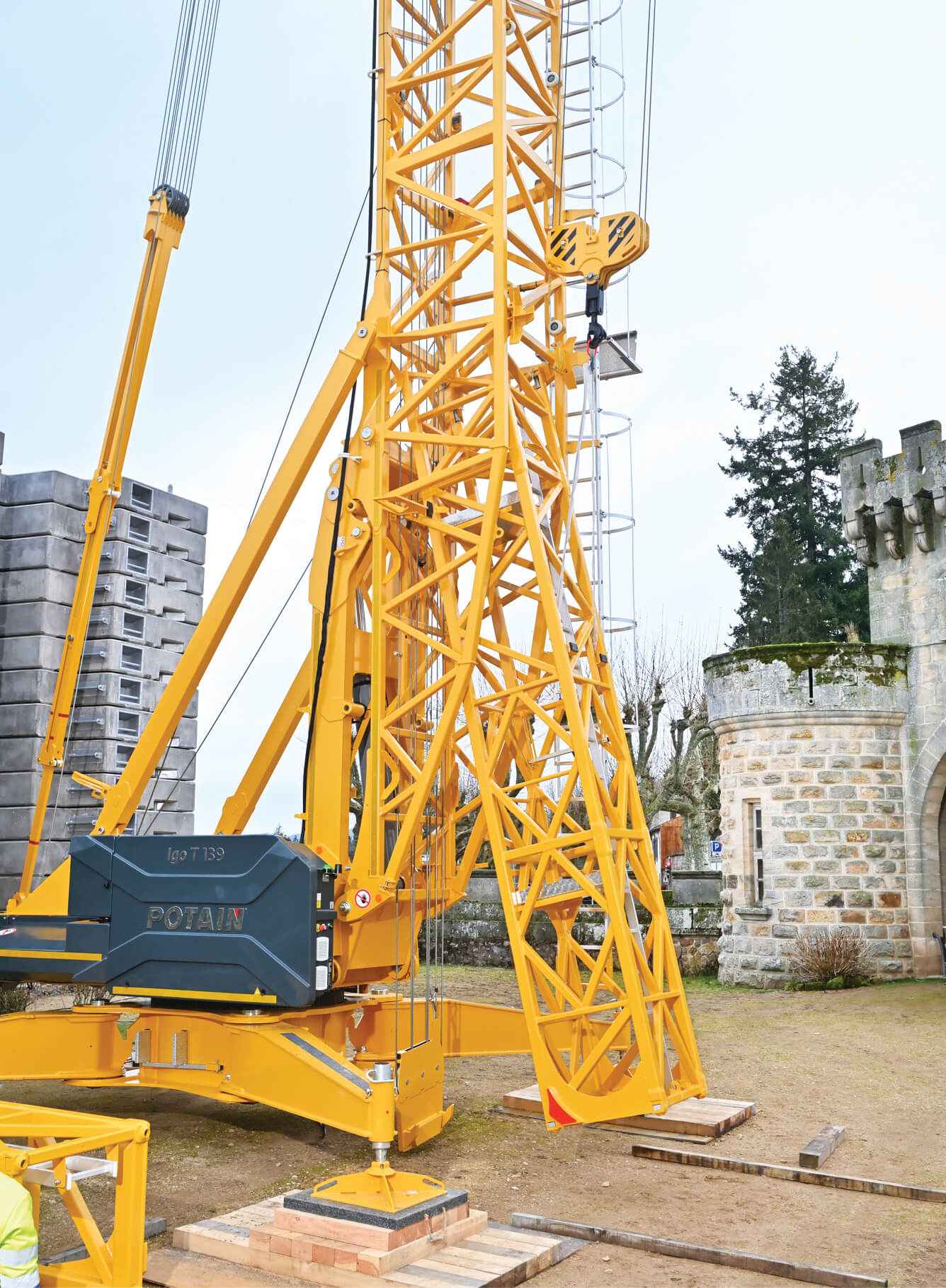
The largest Igo T self-erecting crane, the Potain Igo T 139 that debuted in 2025, delivers a 180.4-foot radius and a maximum hook height of 133.5 feet while lifting 1.3 tons at full radius.
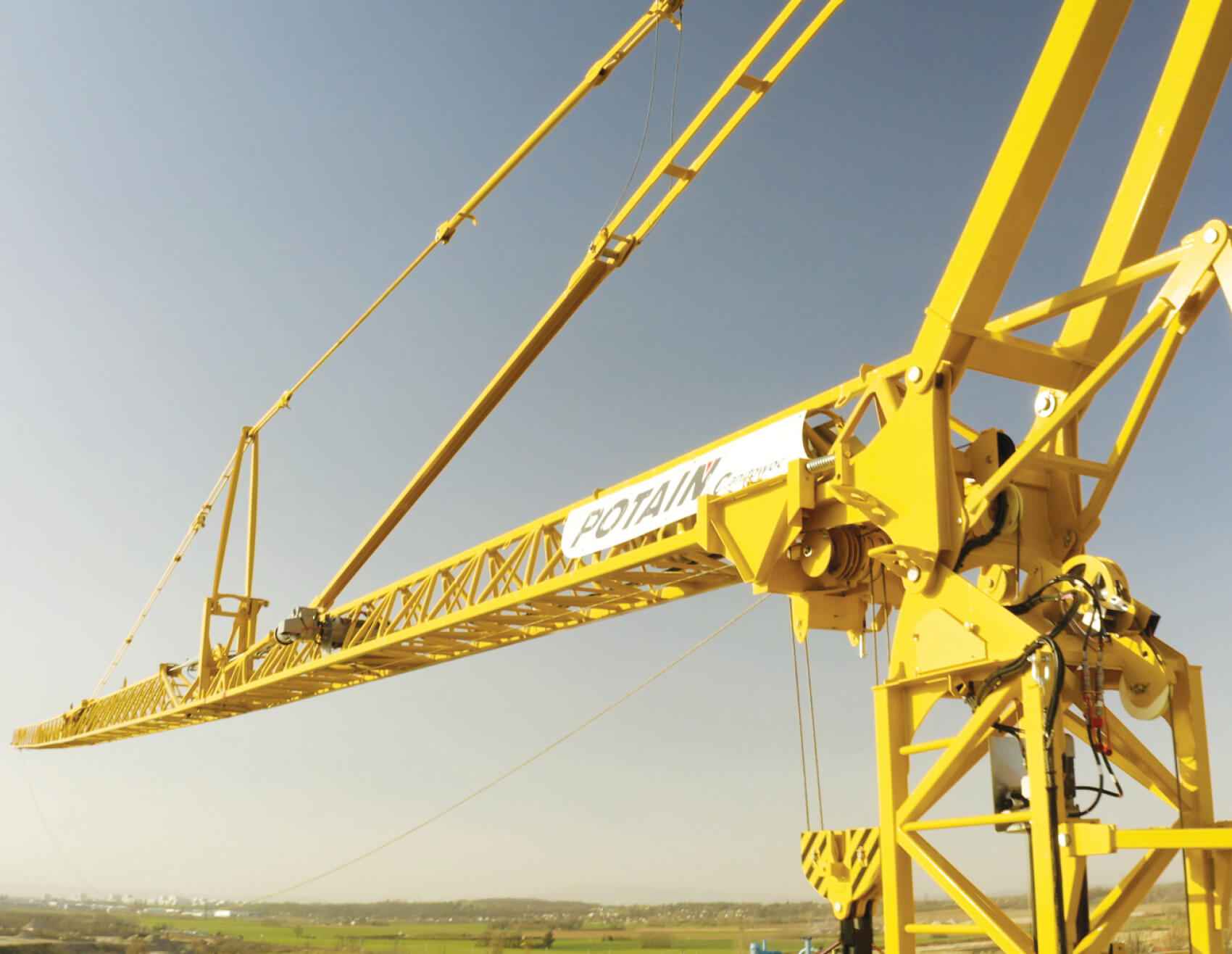
The Potain Igo T 99, a 1.3-ton self-erecting crane model with a maximum radius of 157 feet has a capacity of 6.6 tons at a radius of 43.6 feet. To adapt to varying project requirements, the crane offers seven hook-height configurations ranging from 67.2 to 126 feet.
To help maximize equipment availability and streamline maintenance, the Igo T 99 can be equipped with Potain CONNECT, Manitowoc’s telematics platform. The system provides remote, real-time access to key crane information, including configuration data, location and operating statistics.
It also enables technicians to perform an initial diagnosis remotely before traveling to the jobsite, saving both time and service costs. Crane users can access information and review key operating data as well through a web-based interface and the Potain CONNECT Assist mobile app.
FB Gru self-erecting cranes are offered by Creative Lifting Services, the Italian manufacturer’s primary North American sales, rentals and service supplier. Included are the 43M FB Gru (FB22141) with an 8,820-pound maximum capacity, an 83-foot horizontal hook height and a maximum jib length radius of 141 feet.
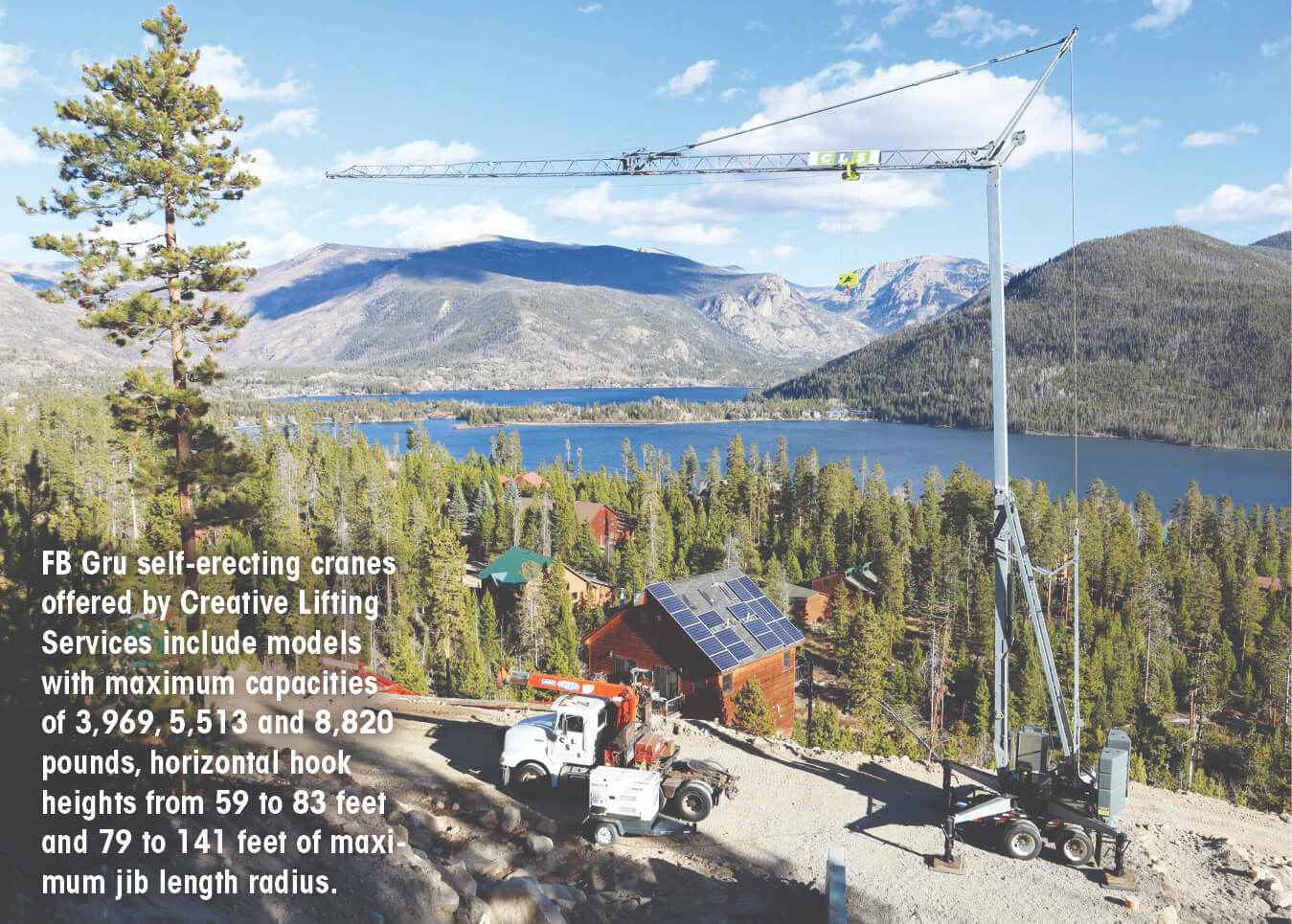
Other models in the FB Gru self-erecting crane lineup include the 27M FB Gru (FB1589) with a 5,513-pound maximum capacity, a 67-foot horizontal hook height and maximum jib length radius of 89 feet. In addition, there’s the 24M FB Gru, which features a 3,969-pound maximum capacity, a 59-foot horizontal hook height and a maximum jib length radius of 79 feet.
The Saez HT47 self-erecting crane, a 6.6-ton model, is designed to allow for maximum height under the hook without needing to reduce the load curve. Versatility in the model comes from four jib lengths with the jib horizontal at 2 degrees or angled up at 30 degrees.
Standard on the HT47 is a restricted area system, a zoning system, a Super-Lift mode and a remote-control unit with a digital display. The HT47 can provide operating information to customers through the manufacturer’s Saez Direct Service (SDS) system. The connection also sends data on operating times, motor start-ups, use of brakes and work cycles, wind speed and other parameters.
With crane users and contractors increasingly seeking solutions that help address labor shortages, improve productivity and keep projects on schedule, and deliver high performance and efficiency in space-constrained applications, self-erecting cranes are well positioned to meet those needs.