Finding the Right Crane
A straightforward data-driven approach to crane rental pays dividends
Finding a crane rental company for your project should be straightforward, but it often isn’t and if you’ve spent any time trying to do it, you already know that. Maybe you’ve been there:
You pull up Google, search “Crane Rental Nashville” and the results are overwhelming. When you finally sift through each company’s website and give them a call, you learn they either don’t have the size or type of crane you need, or you find out they don’t have equipment in your job’s location.
So, you call around. You ask somebody who knows somebody. You hope the referral pans out. You burn time you don’t have, and you still aren’t sure you’re talking to the right company.
The Real Problem
There are many capable crane companies operating all over this country. The problem is visibility. The information exists and the companies are out there, but there isn’t a crane rental database to organize them all.
The result? Most people end up working with whoever they happen to know, not necessarily whoever is best positioned to do the job. That creates a few problems that cost real money:
You end up in re-rent situations. When you can’t easily identify who operates near your project, you often end up going through a middleman, a company that doesn’t own the equipment itself but rents it from someone who does and marks it up in the process. You pay more, you add another layer of coordination, and the company that has the right equipment for your job may never get the call.
Your comparison set is too small. Most people end up comparing two or three companies based on who they could reach through their network. That’s not enough. The right company for your job might be one you’d never find through referrals alone.
You don’t have the tools to know what you need. A lot of people, especially those who don’t source cranes regularly, aren’t sure what size or type of crane their job requires before they start calling. Without a sizing resource, you’re starting every conversation at a disadvantage.
You have no way to evaluate reputation objectively. In this industry, reputation is everything. But if you can’t read reviews from real customers on real jobs, you’re relying on whoever vouched for the company and that’s not always enough to go on.
The Right Information
A person or company who’s looking to rent a crane should have every piece of information they need to make a good decision, and none of it should be hidden. That means a few specific things:
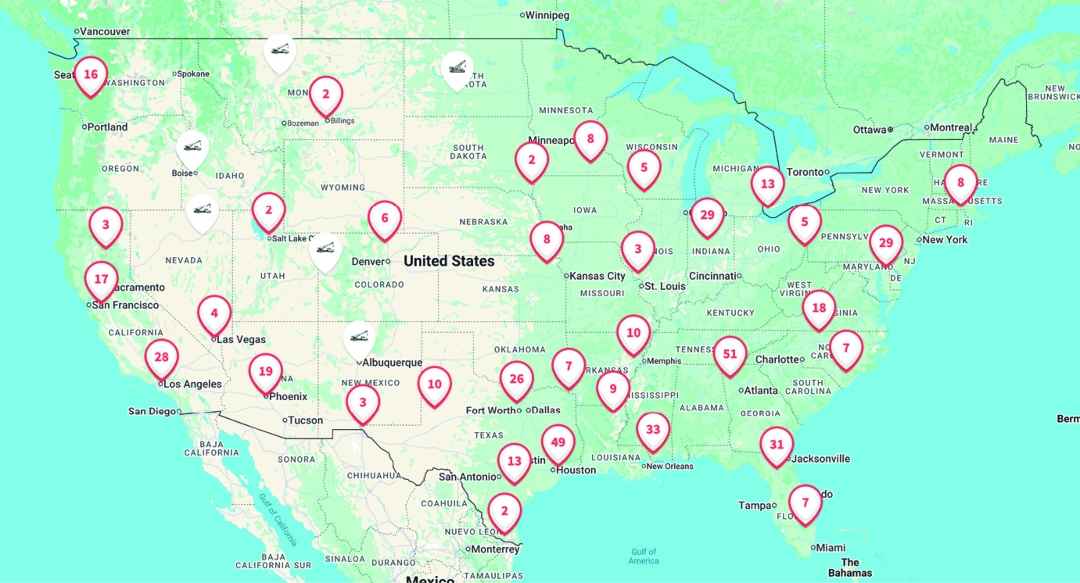
You need to know who operates near your jobsite. Not just which companies list a state as their service area, but which ones have real operations close to your project. Time and time again, mobilization/demobilization charges make up the majority of the project cost. In short, mobilization cost is real, and proximity matters.
You need to be able to filter by what you need. With the ability to search by location, crane type and tonnage range, the results are going to be different. Now you can see all available companies in one, organized place, not a hand-picked shortlist.
You need to hear from people who’ve used these companies. With customer reviews on company listings, a contractor knows that the provider’s reputation is built job by job. Reviews hold operators accountable in a way the referral network never could.
You need tools that help you figure out what you need before you start calling. Crane sizing tools built directly into a platform let project managers who aren’t crane specialists translate their job parameters into equipment specifications before they pick up the phone. No more walking into conversations without knowing what you’re looking for.
You need pricing context. Crane rental rates vary by equipment type, capacity, region and operator. If you don’t have a reference point, you’re at a disadvantage in every quote conversation. Pricing tools give buyers the market context they need to evaluate what they’re being offered.
Market Transparency
The crane rental market has worked on information asymmetry for a long time. Companies that are well-connected get the calls. Companies that do great work but aren’t in the right person’s contact list don’t. Buyers who have strong industry networks get options. Buyers who are new to the market, or new to sourcing cranes altogether, get whatever they can find.
With a database that is visible to every user running a search, a regional operator that does excellent work has the same discoverability as a national company with a full marketing team. And a buyer who’s never rented a crane before has access to the same tools and information as someone who’s been doing it for years.
The foundation of market transparency is an accurate, up-to-date resource for crane locations and availabilities across the country, and what mobilization looks like for your timeline.
That level of visibility doesn’t exist anywhere in this market today, especially for large equipment in the 300-ton-and-up category.
If you’ve ever needed to know where a crane is sitting right now and who controls it, you understand exactly why it matters, and exactly why a complete, accurate, actively maintained directory that buyers trust and operators participate in is needed.
If you need to rent a crane, you shouldn’t have to guess or know the right person to find the right company. You should be able to search by where your project is, what you need, what other people have said about the companies in your area, what the equipment should cost, and get to the right answer without burning a week on phone calls and referrals.
About the Author: Marilyn Wilkes, marketing director at CraneMap, has more than 15 years of experience in operations, projects and sales and marketing roles with heavy lift and transport companies in the crane and rigging industry.
CraneMap provides a comprehensive, searchable map and database of crane rental companies in the United States. For more information: www.cranemap.com.