Keeping Up With Upkeep
Managing maintenance pays big dividends
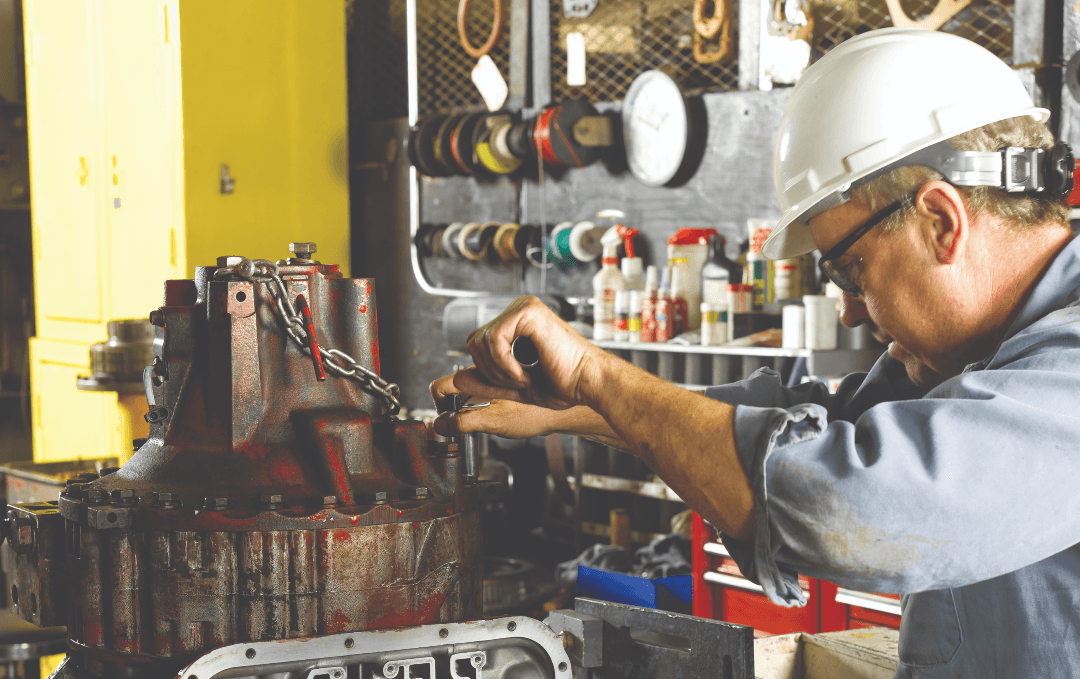
An ALL company expert performs maintenance in one of the company’s shops. ALL relies on its own techs to do most service work but uses selected outside experts for some specialty tasks or when it is faster than getting an ALL tech to a remote site.
The best way to be sure a crane always works reliably — and keeps working for as many years as possible — is to maintain it correctly.
Whether an equipment owner does that with its own staff or by contracting with an outside provider depends on the company’s equipment plan.
But regardless of whether the maintenance is done in house, by an outside specialist, or with a hybrid arrangement, the system must track what’s been done, what’s needed next, and when to do it.
Fortunately, today’s software can make maintenance programs easier, more automatic, and more proactive than traditional hand-managed paper systems.
Crane Hot Line asked a fleet management expert, two crane fleet owners, and three software providers to weigh in about crane maintenance.
Mike Vorster owns fleet management consultant CEMPCentral, Inc., and has been an expert in the field for 40 years.
Vorster said that a company’s decision whether to do its own crane maintenance or outsources it often depends on the kind of business the company is in.
“If it owns a big fleet of ground-engaging iron plus a few cranes, it tends to outsource crane maintenance to experts,” he explained. “Cranes are too specialized and carry too much risk to be worked on by someone unfamiliar with the regulations and safety implications. Also, outsourcing maintenance helps reduce the crane owner’s risk.”
Vorster added, “On the other hand, if crane rental is your business, you likely have a staff of well trained and equipped specialists to maintain your cranes properly.”
Fleets Mainly Self-Maintain
We talked to two crane fleet owners about whether they do maintenance themselves or through outside providers.
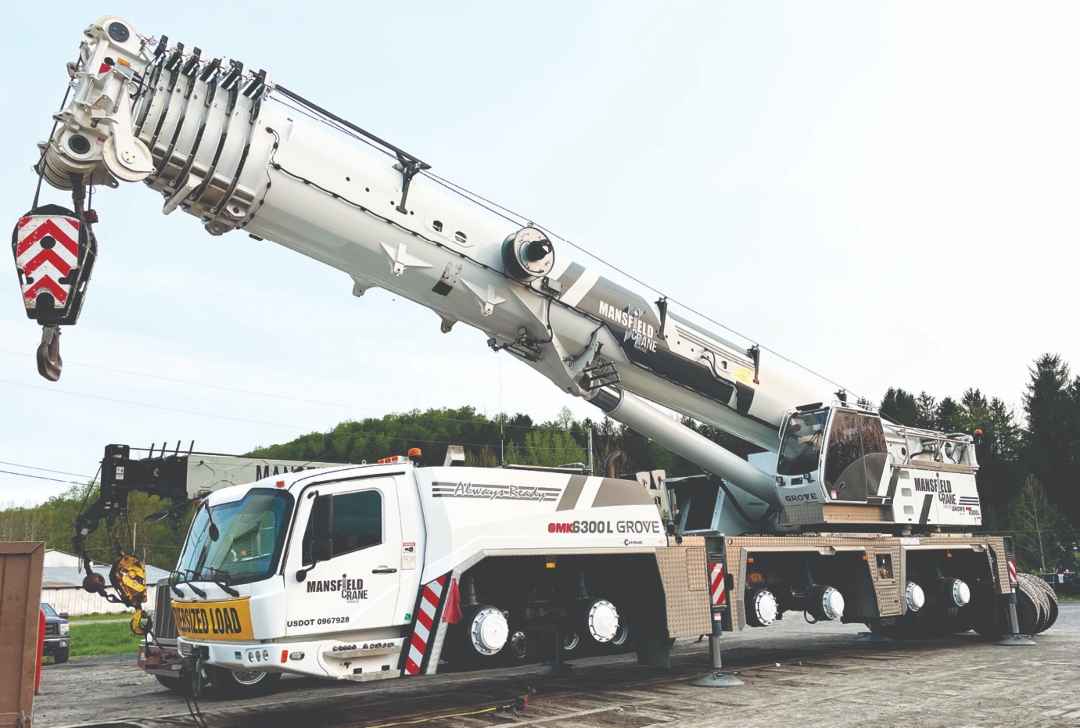
Mansfield Crane Service runs a fleet of 12 cranes serving Pennsylvania and Upstate New York.
“We do most of our maintenance in house,” said Trapper Wyman, estimating and planning manager. “We have excellent technicians who can fully rebuild engines, transmissions, and telescopic booms.”
Wyman added that Mansfield outsources maintenance only if a crane needs something that must be done by a dealer or if Mansfield techs are too busy.
He noted that Mansfield’s extensive preventive maintenance program includes doing 30-day Department of Transportation (DOT) inspections on all its commercial trucks and on-road cranes.
Mansfield uses Whip Around as its fleet inspection, maintenance, and compliance software.
The ALL Family of Companies operates one of North America’s largest fleets of cranes, with 29 branches across 14 states.
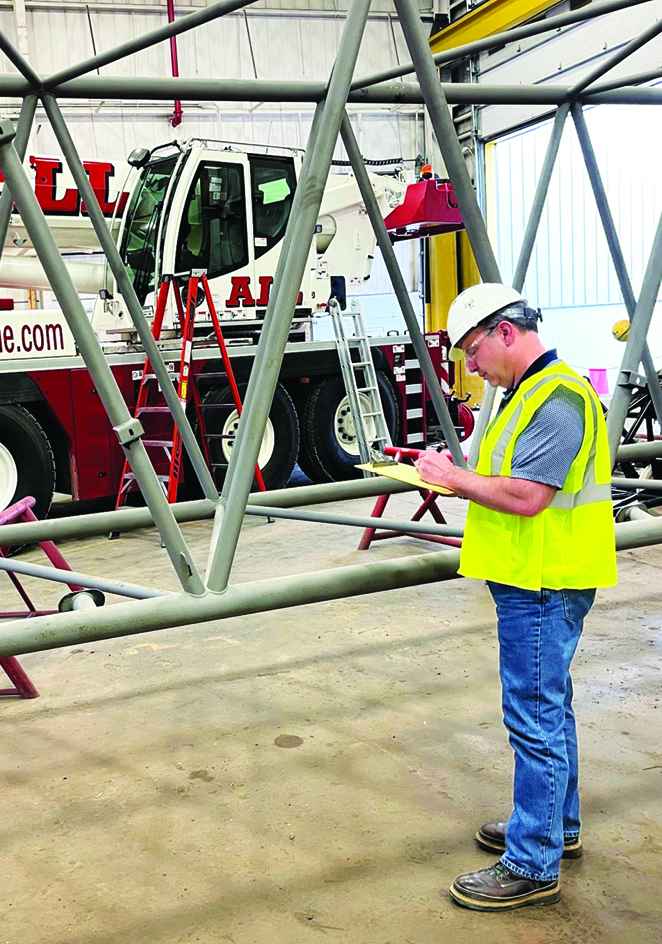
Kyle Zulker, service and shop supervisor at ALL Crane Rental of Tennessee and Chris Garman, service manager at ALL Carolina Crane & Equipment discussed how the ALL companies spoke about crane maintenance.
“In general, our goal is to handle all service and maintenance in-house, performed by our own people,” said Zulker. “That said, customer uptime is important. So, when a qualified third-party vendor can get the machine back to work correctly and sooner to meet our customer’s schedule, we will not hesitate to do so.”
Zulker said three factors affect the decision whether to outsource: location, parts availability, and customer schedule.
He explained that in all but the rarest of circumstances, ALL’s own service teams can get to a jobsite quickly, and that ALL usually has the needed parts at one of its branches.
Garman added, “When we do have to outsource work, we don’t go to just anyone. We’ve developed relationships with particular vendors we know and trust to do the job to our standards.”
Garman and Zulker both mentioned that all branches share the collective expertise held across the entire organization.
“Sometimes, we look beyond our own branch and bring in a highly trained technician who specializes in a particular machine,” said Garman. “My branch might not have that person, but another could. And sometimes my branch is the resource another branch calls on.”
Maintaining a large fleet of cranes that encompasses many types, capacities, and brands helps ALL see trends in equipment performance and maintenance needs.
“In many cases, the sheer number of units we operate of a given model gives us insight,” said Garman. “For example, we might see that a particular bearing tends to wear out after about 400 working hours, so we know to plan for it. That’s meaningful field data that can also help a manufacturer improve a future model.”
All’s use of predictive maintenance analytics helps the company maximize crane uptime by preventing future problems.
The company’s service system follows the equipment manufacturer’s maintenance guidelines, which are typically based on hours of use.
“We track those intervals to ensure maintenance happens on schedule,” said Zulker.
In addition to following manufacturers’ service recommendations, ALL uses its own programs to help find and fix problems before they happen.
“Several years ago, we instituted a company-wide oil sampling program for every piece of equipment,” said Zulker. “By testing samples at regular intervals, we track wear, moisture, and contaminants in all of a crane’s lubricants.”
Zulker calls it a real boon to ALL’s predictive maintenance program. The results can flag a discrepancy so the service team can inspect further and decide whether to correct it or monitor it.
“Too much iron might mean a gear is overly worn or a bearing has gone bad. Too much potassium and sodium can indicate a coolant leak. Elevated chromium might be caused by a worn piston ring. Silicone could come from a crack in an air intake hose,” he said.
“We also don’t just change oil and filters when we do our service,” added Garman. “Our techs test every function and go over the entire unit, looking for potential issues like a leaking hydraulic line or seal, and they also check things like U-joints.”
Digital Systems Simplify Maintenance Management
Every piece of equipment in ALL’s fleet has a unit number and is tracked for all preventive maintenance, inspections, work completed, parts used, and oil sampling, if applicable.
Zulker and Garman say that that is crucial to service departments keeping up about a crane’s location, maintenance, and safety.
The company uses its own self-developed software system with a digital dashboard that aggregates fleet-wide information in a central hub that can be seen at every ALL branch.
Guys in the field can open a work order, and track not only the progress of that repair, but also the complete service history of any other one in the fleet.
If a crane shows up at a sister yard, the local service team can immediately see what’s been done, what’s coming due, and anything else they need to know as they take over its care.
Commercially Available Maintenance Systems
Crane owners who don’t have the in-house expertise or budget to develop their own maintenance-tracking software can rely on commercially developed programs from specialist companies such as A1A Software or Fleet Cost & Care.
When maintenance information is spread across paper records, spreadsheets, hour meters, and many departments, it becomes much harder to know what needs attention and when.
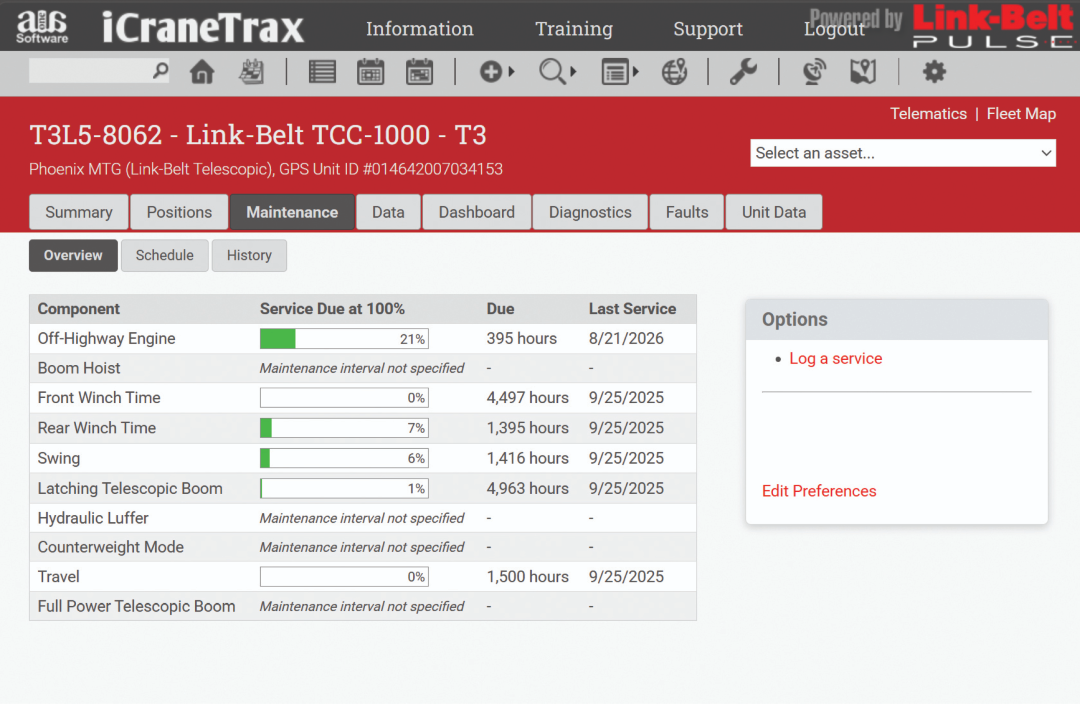
“That is one of the key challenges crane owners are looking to solve when they adopt digital maintenance and fleet-management systems, such as A1A Software’s iCraneTrax,” said Tawnia Weiss, president of A1A.
Weiss explains that by centralizing equipment and maintenance information, iCraneTrax helps managers and mechanics better track service requirements, reduce missed maintenance, and improve communication.
“One customer described the difficulty of managing maintenance when multiple operators were using the same piece of equipment,” said Weiss. “By digitally tracking the equipment and alerting management and mechanics when service was due, the company gained better control over its maintenance program.”
A major advantage of combining digital management with telematics is the ability to make maintenance decisions based on actual equipment usage.
“The value is not simply collecting more data, but turning that data into useful information,” said Weiss. “iCraneTrax organizes maintenance information into schedules, alerts, and reports, helping employees identify upcoming service without constantly checking each machine individually.”
For larger or geographically dispersed fleets, that can be especially valuable because the right information can be communicated directly to the people responsible for acting on it.
Telematics can also help maintenance teams respond more effectively when problems occur.
Diagnostic and operating information may give technicians a better starting point before they arrive at the crane and help them determine what tools, parts, or expertise may be needed.
Maintenance also affects more than the service department.
When a crane is unavailable, it can affect dispatch, scheduling, active jobs, and customer commitments.
“A1A Software’s iFleetTrax, the next generation of its fleet-management platform, expands on the foundation of iCraneTrax by connecting fleet maintenance with broader operational functions such as scheduling, dispatch, accounting, resources, customers, documents, and reporting,” Weiss noted.
She added that crane owners are ultimately looking for better visibility, fewer surprises, and greater control over equipment availability.
Digital management helps move companies from reacting to maintenance problems toward planning for them.
“By tracking equipment usage, identifying upcoming service, organizing maintenance information, and connecting it with the rest of the operation, programs like iCraneTrax and iFleetTrax help owners make more informed decisions and keep their fleets productive,” said Weiss.
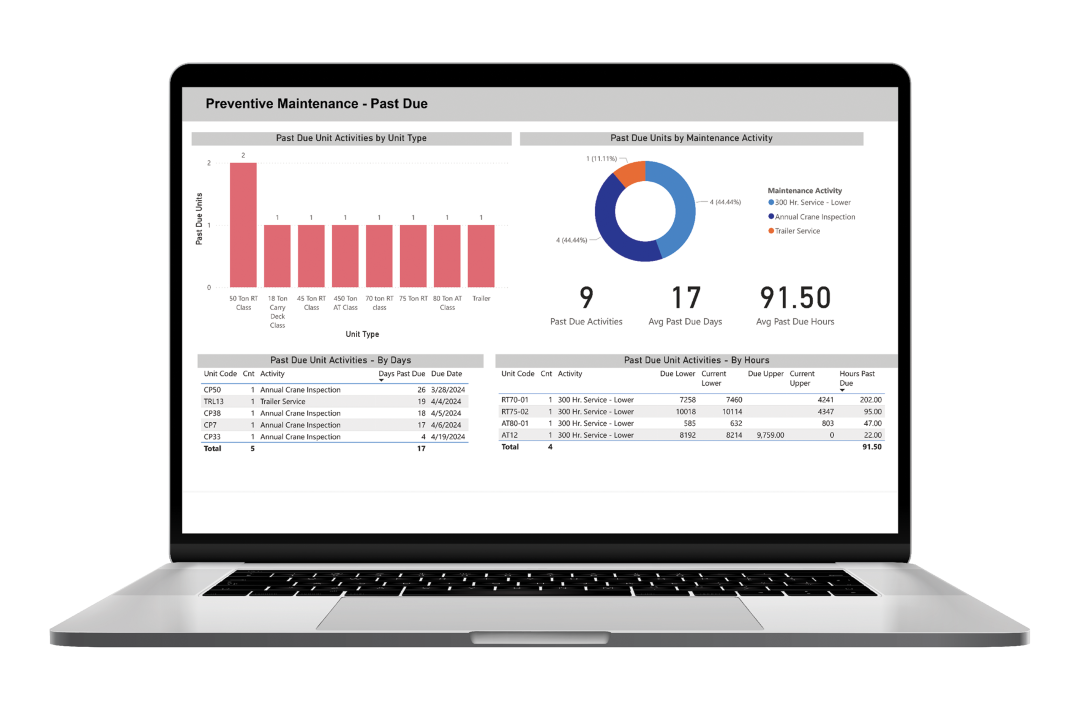
Another company that produces digital solutions for businesses that run crews and equipment is Fleet Cost & Care.
Jack Curran, vice president of strategic accounts, said that connected operations turn field activity into measurable performance.
“For crane owners, maintenance is not separate from operations,” said Curran. “Equipment condition impacts availability, availability impacts dispatch, and dispatch impacts utilization, job performance, and revenue.”
The challenge, he noted, is connecting those activities, and Fleet Cost & Care has solved for this.
“Connected operational software brings maintenance, inspections, equipment, dispatch, and field execution into the same workflow, allowing information captured in one area to drive decisions in the next,” he said.
Curran noted that that connection also creates measurable operational key performance indicators (KPIs):
- Equipment Readiness: percent of fleet ready for dispatch
- Utilization: operating/billable vs. available hours
- PM Compliance: percent of scheduled maintenance completed on time
- Unplanned Downtime: hours lost to unscheduled repairs
- Maintenance Cost: cost per asset or operating hour
- Deficiency Closure: time from identified issue to resolution
- Job Cost Performance: actual vs. planned operating costs
“The value for an organization is not simply digitizing maintenance,” noted Curran. “It is connecting asset maintenance to the operational workflow, so crane owners can see how equipment performance affects field execution and ultimately business performance.”
A recently launched digital aid comes from Crane Inspection Checklists, LLC, a company formed by James Headley, CEO of Crane Institute of America, and Robbe Morris, a digital solutions expert with more than 17 years of experience.
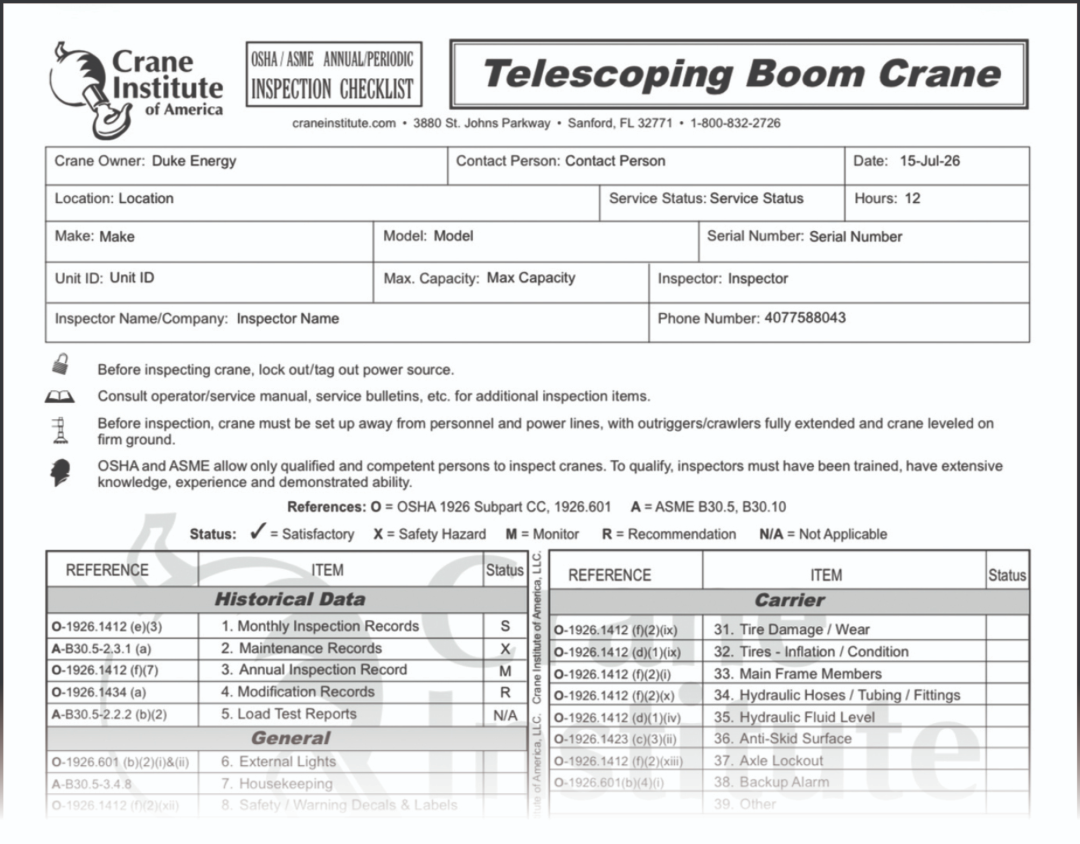
Crane Inspection Checklists is a digital inspection and compliance mobile app built on the proven official checklist forms offered for decades by Crane Institute.
The app brings the expert-developed forms into a field-ready digital workflow, with references to OSHA/ASME standards in order to help crane inspectors document, store, and share inspection records, and analyze in the AI tool of their choice.
Seven of the system’s key features:
- Forms are updated as OSHA/ASME requirements change
- Relevant OSHA/ASME references appear directly in the completed PDF, including clickable OSHA links to the related regulations
- The ability to export checklist data to Excel for analysis
- The ability to enter data by voice
- The ability to use the app anywhere, without Wi-Fi or cellular connection
- The ability to photograph inspected items
- 30-day free trial
Users purchase licenses, and there are no setup or cancellation fees.