Meeting Challenges
Effective lift planning eliminates variables, cuts costs, and improves safety


Tawnia Weiss, president of A1A Software LLC has spent her entire career in the crane and transportation industries. At Compu-Crane and Rigging Pro software she gained experience in the technology side of equipment service. In 2006, Weiss founded A1A, bringing to the industry a first-hand understanding of how equipment operates and how owners manage their fleets and use their cranes.

In an exclusive conversation with Crane Hot Line, Weiss discussed how crane companies can more effectively provide efficient, cost effective, and safer lifts.
Q: What lift planning challenges are crane companies facing, and what are the costs of not addressing them?
There are a lot of variables that go into every lift, and the challenge is making sure all the pieces come together before the crane ever gets to the jobsite. Those include crane selection, configuration, radius, rigging, ground conditions, surrounding structures, and equipment placement.
If something is missed, it can quickly turn into delays, rework, added mobilization costs, or lost time. But the biggest concern is safety. The more you can identify and work through during the planning stage, the less likely you are to discover a serious issue once the crew and equipment are already in place.
Q: How does lift planning software help address those challenges?
It gives planners the opportunity to work through the lift ahead of time and see what the job is going to look like. The real value is being able to catch something before it becomes a field problem. If you can see that a crane needs to be repositioned, or that there may be a clearance issue during planning, that is much easier to address than finding out on the day of the lift.
Q: What are some lift planning best practices, and what are the benefits of advanced solutions?
It really starts with having accurate information. You need to know your load, your crane, your rigging, your site conditions, and what is around you. From there, you want to verify your crane capacity, look closely at ground conditions, and make sure the plan is communicated clearly to everyone involved.
Advanced planning tools make that easier because you can compare different options and visualize the lift instead of relying only on drawings and numbers. That gives everyone a better understanding of the plan and can help reduce surprises once the job starts.
Q: What factors are driving lift planning software development?
A big part of it is that jobsites are becoming more complex. Companies are being asked to work in tighter areas, around more obstacles, and with less room for error. Safety is also a major factor. The industry wants better ways to identify potential hazards before people and equipment are exposed to them.
The more a planner can model and review ahead of time, the better prepared the team can be. We are also seeing more demand for software that is easier to use in the field, works across devices, and gives users access to accurate crane data without making the planning process more complicated.
Q: How can crane companies measure ROI on lift planning technology?
A good place to start is with time. How long does it take to build a plan? How many revisions are being made? Are you reducing unnecessary equipment changes, extra mobilizations, or job delays?
There are also savings that are harder to measure directly, such as better communication and fewer planning-related issues in the field. Overall, if the software helps prevent costly mistakes, saves planning hours, and helps crews get to the jobsite better prepared and stay safe, the value can add up very quickly.
Q: What should crane companies look for in a lift planning solutions provider?
Industry knowledge is one of the biggest things. You want a provider that understands cranes and understands how lift planning works in the real world. You also want accurate crane and load-chart data, strong visualization tools, ground-bearing-pressure capabilities, rigging tools, and software that is easy for people to use.
Beyond the technology, training and support are very important. The software only brings value if your team can use it effectively, so having a provider that continues to support the customer and improve the product makes a big difference.
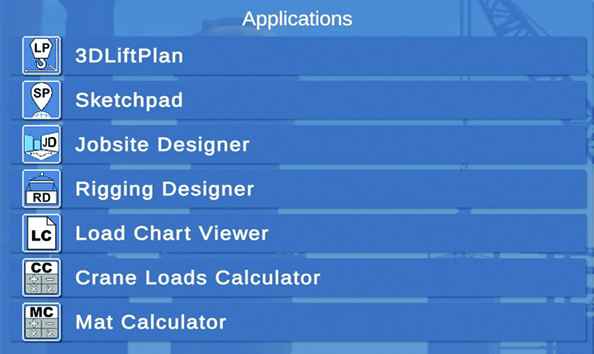
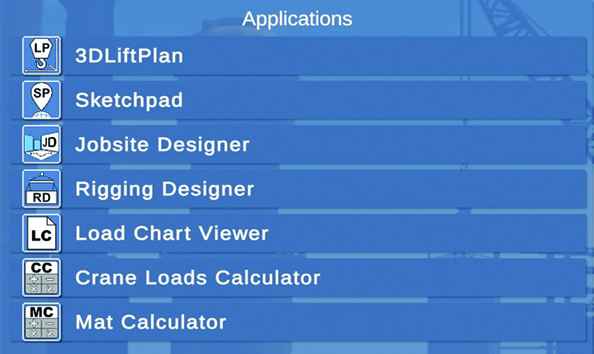
A1A Software offers a suite of tools for rigging, site layout, jobsite design, load chart viewing, crane loads, and mat calculators. With 3D Lift Plan, crane and heavy construction companies can input load information, select cranes, review load charts, calculate ground-bearing pressure, build jobsites, and share their plans. In addition, the company offers 3D Lift Vision for simulating lifts using virtual reality (VR) technology. For more information, visit a1asoftware.com.