
New Opportunities
Teleboom crawlers are proving more valuable on a range of projects
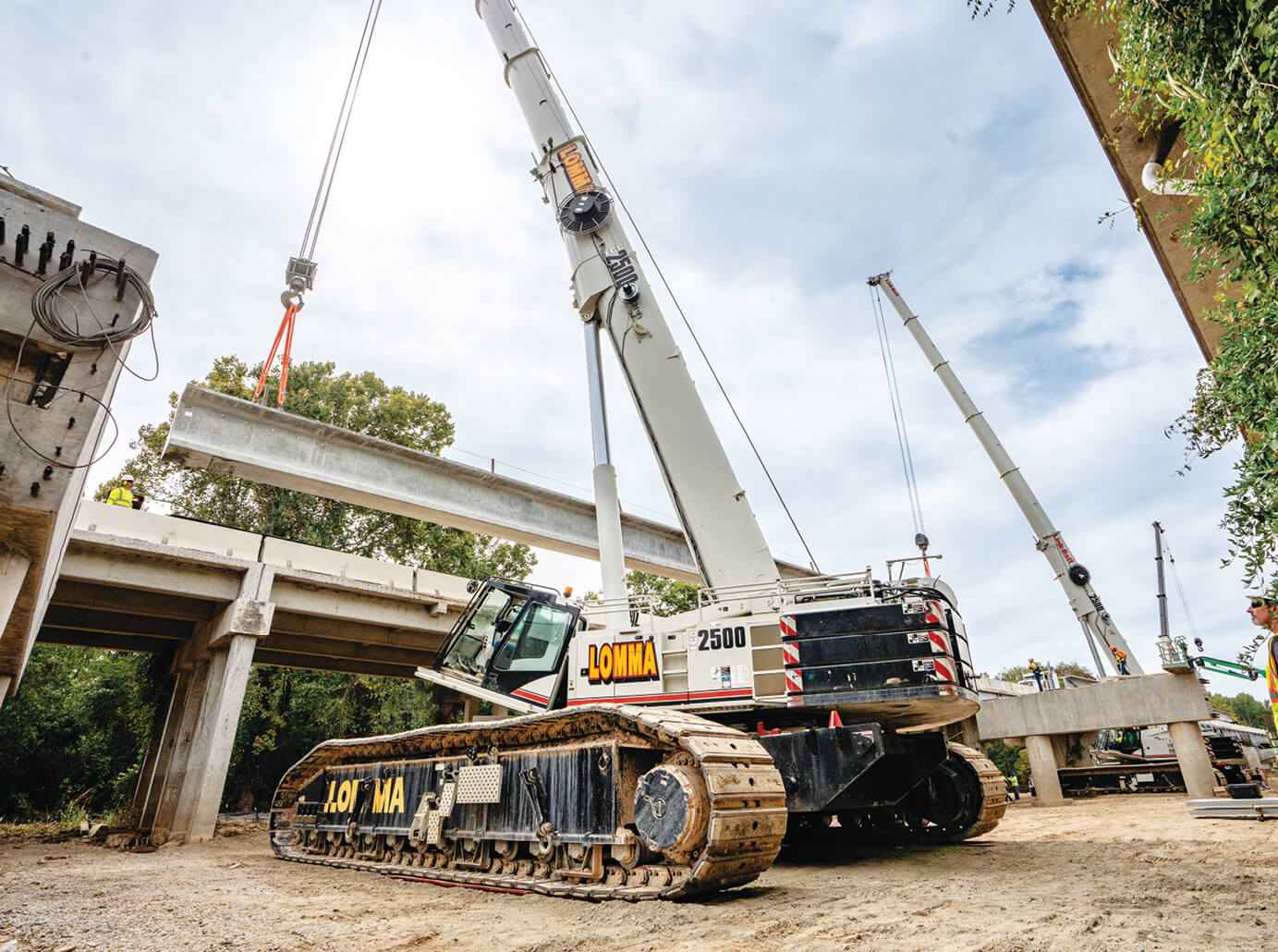
Combining the mobility and terrain capability of a crawler crane with the speed, simplicity and flexibility of a telescopic boom, the teleboom crawler crane has long occupied a unique position in the lifting equipment market. Today, that combination is proving more valuable than ever.
Across North America, teleboom crawler cranes are increasingly being deployed on infrastructure projects, bridge construction, utility work, wind energy sites, industrial developments, manufacturing facilities and a rapidly growing category of projects, including data center and electrical infrastructure construction.
Contractors are continuing to gravitate toward teleboom crawlers because they can travel with loads, work on uneven terrain, maneuver in confined spaces, self-assemble, transport efficiently and transition quickly between tasks. Those capabilities are helping drive strong market growth while also expanding the range of applications where teleboom crawlers are becoming the crane of choice.
Allen Kadow, product manager, telescopic and lattice boom crawler cranes at Tadano, emphasized the wide variety of applications these cranes now serve. “These cranes are so versatile,” he said. “Jobs like foundation work, bridge and heavy civil, wind support, powerline construction and maintenance, commercial construction and the new AI infrastructure are all perfect applications.”
Traditional sectors remain a source of core demand for teleboom crawlers. “In bridge and highway construction their lifting capability, mobility and ability to work on challenging terrain make them an ideal fit,” said JJ Grace, Manitowoc’s product manager for GHC cranes. “These projects often require precise placement of heavy components in tight or congested environments, making the versatility and compact footprint of teleboom crawlers especially valuable.”
Data center development emerged repeatedly as one of the fastest-growing applications identified by manufacturers who noted how that application requires compact, flexible machines that combine strong lifting charts with straightforward transportation.
“Along with applications for telecrawlers remaining consistent over the years, the demand for their use in data center construction has greatly increased,” said Brian Peretin, general manager sales, mobile and crawler cranes division at Liebherr USA, Co. “Between the construction of the data centers themselves and the electric infrastructure required to power them, telecrawlers are a versatile option throughout the entire development process.”
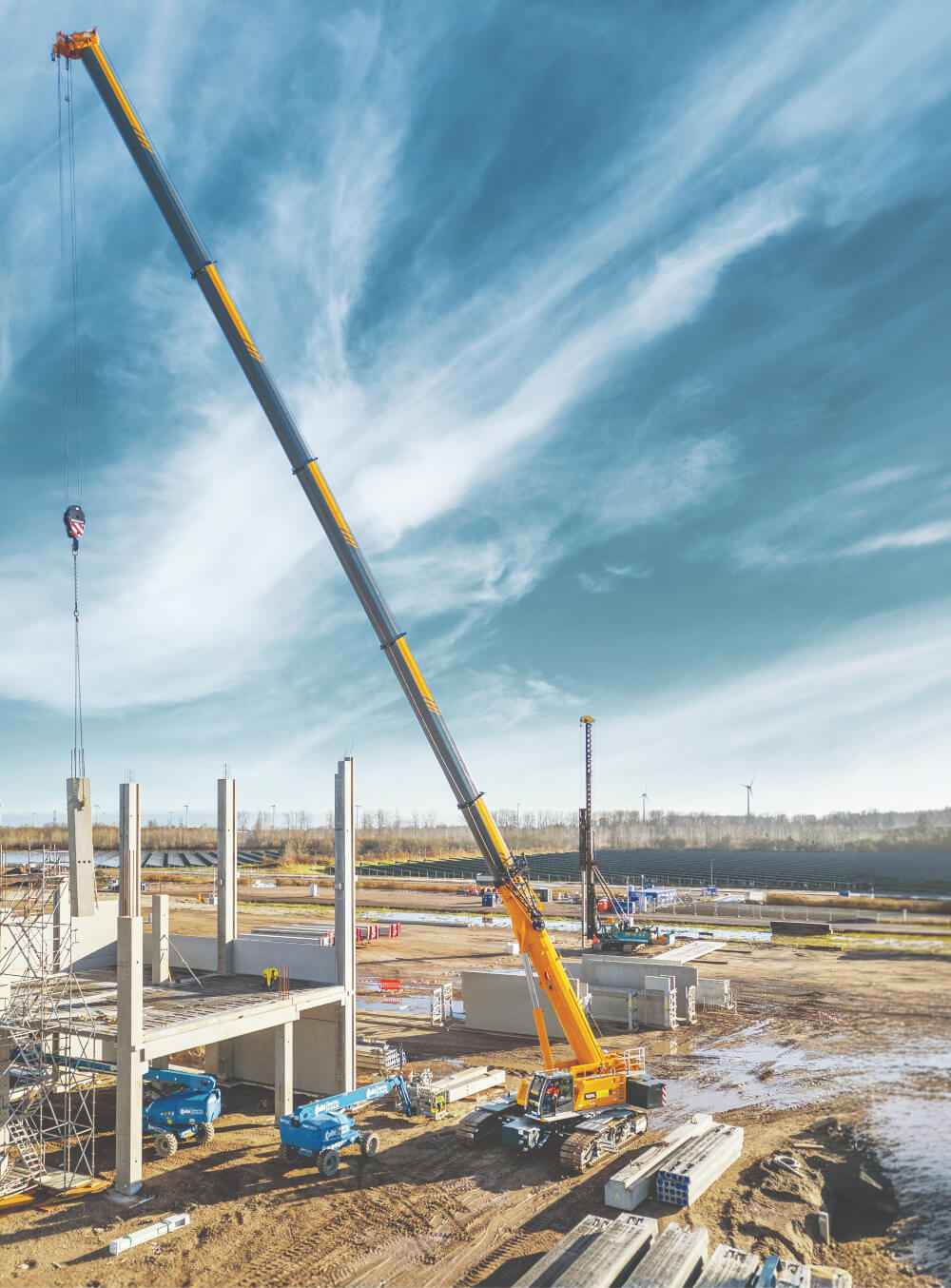
Link-Belt sees similar trends. “The telescopic crawler market continues to steadily grow,” said Michael Dawson, product manager for lattice and telescopic crawler cranes. “Demand has remained resilient because contractors need telecrawlers that can move efficiently across a wide range of jobsites.”
Meanwhile, Sany highlighted a broad spectrum of operational uses for teleboom crawlers, from pick and carry tasks, and steel hanging to precast panels and pile driving operations. Senior Crawler Crane Product Manager Joel Hicks also noted their capability to work on sloped and uneven ground and perform as a helper crane, underscoring their role as multi-purpose assets on complex jobsites.
Technology Advancements
As demand for teleboom crawlers grows, manufacturers continue introducing technologies designed to improve safety, increase productivity and reduce ownership costs.
At Tadano, innovation has centered on enhancing proven systems while expanding functionality.
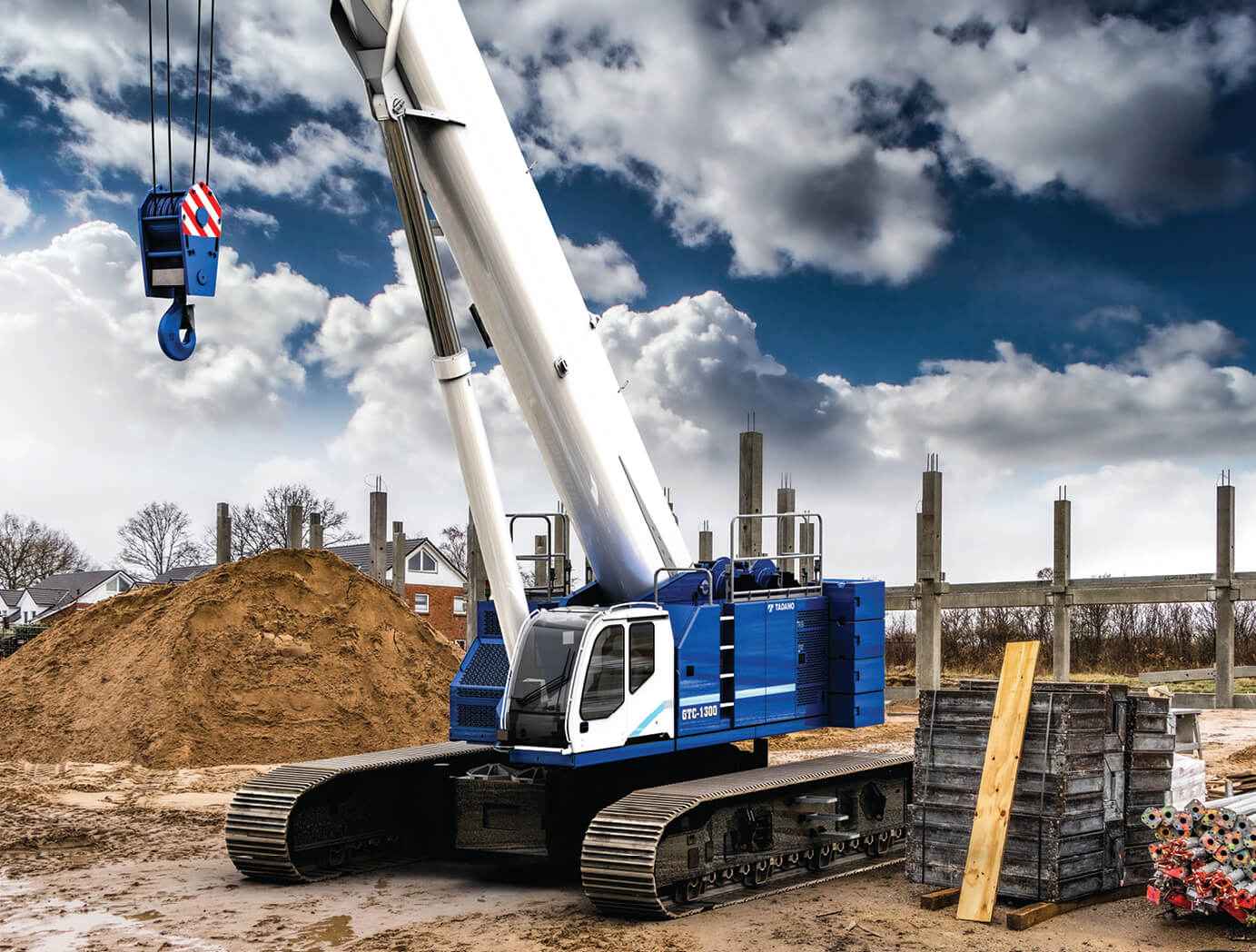
“Our optional 3rd winches and Power-pack mounting frames have allowed our customers to be more efficient,” Kadow said. “In addition, by refining capabilities, customers can expect improved efficiency, reliability, controllability and maintainability.”
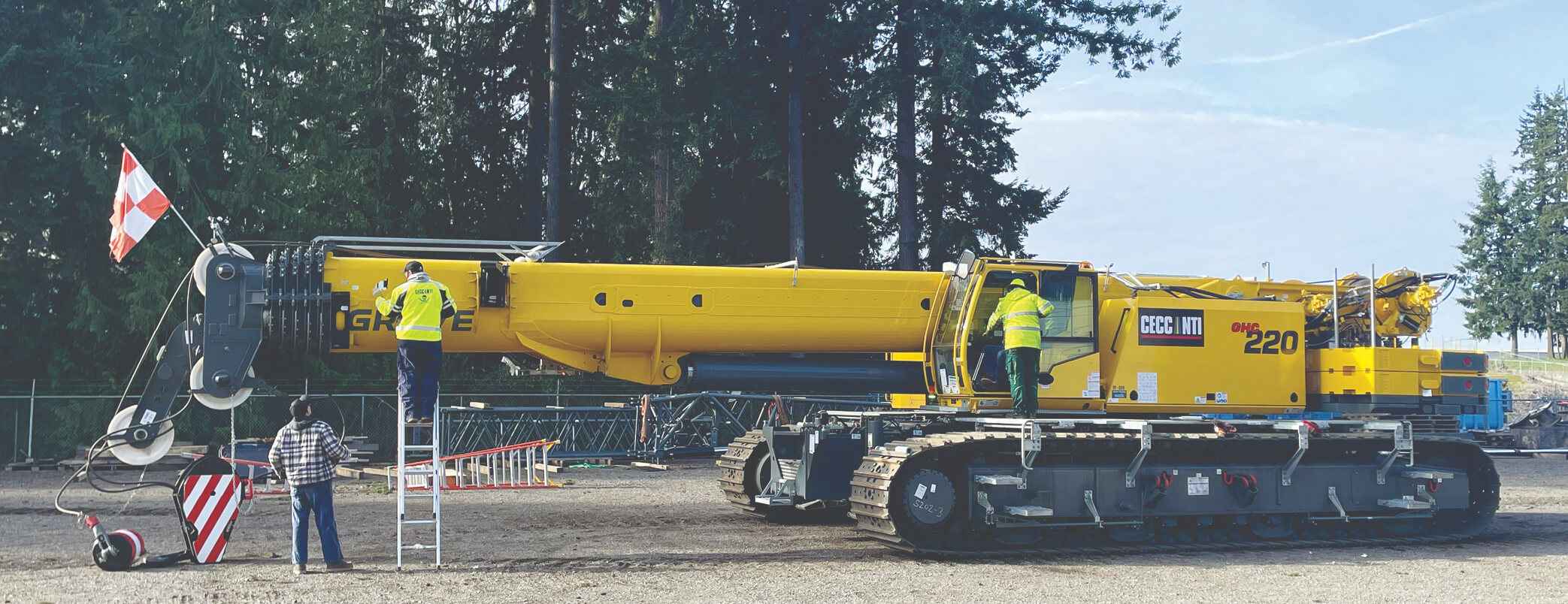
Manitowoc’s newest Grove telecrawler, the GHC220, introduces several technology upgrades aimed at maximizing uptime and simplifying operation.
“One of the most impactful advancements is the introduction of a larger Rated Capacity Limiter (RCL) screen with an intuitive touchscreen display, which provides clearer lifting information while streamlining diagnostics and calibration procedures,” Grace explained. “Easier troubleshooting also allows operators and technicians to identify and resolve issues more quickly, reducing downtime and helping projects remain on schedule.”
Liebherr’s newest advancement centers on lifting performance and operational flexibility. The company’s LTR 1150 is the first of the manufacturer’s telescopic crawler cranes equipped with their VarioBase variable supporting base.
“The technology calculates optimum load capacity in real time based on track width and rotation angle, improving lifting performance while enhancing safety,” Peretin said. “This system enhances both safety and lifting capacity, particularly when lifting over track corners and while operating with reduced track widths.”
Link-Belt’s newest technologies are focused on fuel efficiency and confined-area performance. “The TCC-1800 incorporates an HVAC Auxiliary Power Unit integrated into the Pulse 2.0 touchscreen display system,” Dawson related. “The APU powers climate control, crane displays, radios and lighting without requiring operation of the main engine, resulting in reduced fuel consumption and lower idle time. Additional efficiency comes from a Stage V/Tier 4 Final Cummins QSB6.7 engine with auto-idle capability.”
The TCC-1800 also introduces independent extension cylinders for each side frame, allowing controlled track extension and retraction from inside the cab. This supports Variable Confined Area Lifting Capacities (V-CALC), enabling asymmetrical track positions and 360-degree lifting charts with pick-and-carry capability on compact jobsites, Dawson added.
Sany’s latest technology investments focus on safety, transportability, operator comfort and operational versatility. The company’s cranes, including the new SCA1100TB, feature a camera package that includes a 360-degree surround-view system covering the machine and surrounding work area. The system can also alert operators when personnel enter the crane’s operating zone.
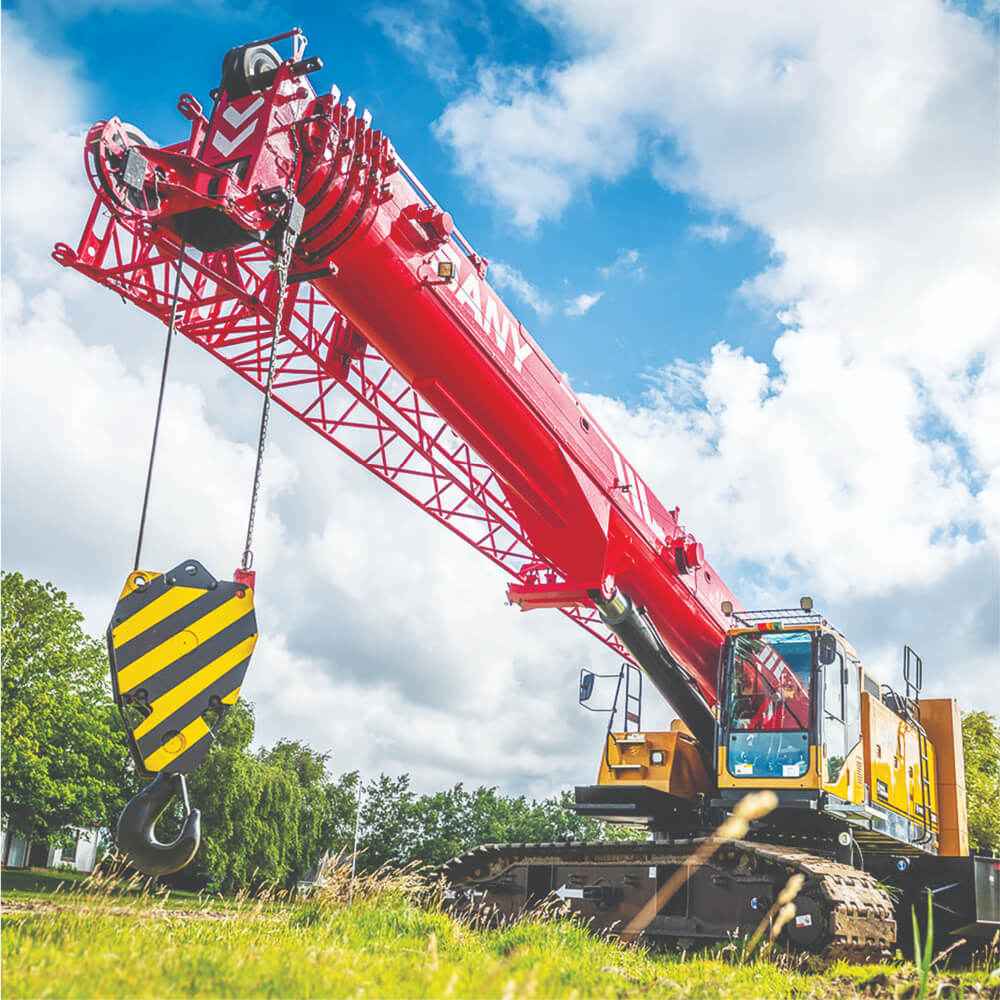
Sany’s touchscreen Load Moment Indicator also displays real-time operating information, including ground-bearing pressure, and automatically disables hydraulic functions when unsafe conditions are detected.
Looking ahead, Sany plans to introduce an integrated APU system that will allow operators to shut down the main engine while maintaining HVAC and electronic systems, reducing fuel consumption and maintenance expenses.
Market Outlook
Across manufacturers, the outlook for the teleboom crawler crane market remains decidedly positive, with expectations of long-term growth despite economic challenges.
Tadano reported that 2025 delivered growth in teleboom crawler sales volume. “The funding for the infrastructure bill was a part of the increase, as was the rise in AI infrastructure projects,” Kadow said. “These effects have leveled out, and we see 2026 being as strong as 2025.”
Manitowoc shared a similarly optimistic view. “The outlook for the teleboom crawler crane market remains very positive, supported by continued investment in infrastructure, energy and large-scale industrial projects,” Grace said. “At the same time, the trend toward higher-capacity machines capable of maximizing productivity reflects growing project demands.”
Liebherr sees growth opportunities across multiple sectors, including infrastructure, green energy, data centers and distribution facilities. “Within these sectors market demand continues to grow for more flexible, compact machines with a strong chart and easy transport,” Peretin said.
“The telescopic crawler market continues to steadily grow,” Dawson said. “At Link-Belt, we continue to see long-term adoption of these cranes across construction, utilities and manufacturing markets. Along with rental fleets upgrading to newer models, their popularity is expected to increase well into the future.”
Sany’s data may provide the clearest indication of market momentum. Hicks reported that the 2025 telescopic crawler market increased 66% compared to 2024, and strong demand had continued into the first quarter of 2026.
“Infrastructure expansion and AI-driven data center development remain primary growth drivers,” Hicks said. “At the same time, the market is shifting toward larger-capacity machines. Reflecting that demand for greater capacity and versatility is that 62% of the telecrawler market now consists of cranes exceeding 105 tons.”
Central Players
Across a growing range of projects, teleboom crawler cranes have moved decisively from niche to necessity. Once considered supplemental lifting solutions, these machines are now central players in infrastructure development, energy, industrial construction and the rapidly expanding data
center market.
The appeal of telecrawlers lies in their distinctive combination of mobility, lifting power, compact design and operational efficiency, all qualities that align well with fast-paced, space-constrained jobsites. As manufacturers continue to refine and expand teleboom crawler offerings, their applications are broadening, and the market outlook is robust.
Teleboom crawler cranes are clearly on an upward trajectory. Their expanding applications, evolving technologies and alignment with major construction trends position them as indispensable tools for modern contractors. As projects grow more complex and timelines tighten, the demand for cranes that combine flexibility, efficiency and performance will only continue to rise and teleboom crawlers are well positioned to meet that demand.
SNAPSHOTS: Teleboom Crawlers in Action
Data Center Construction Support
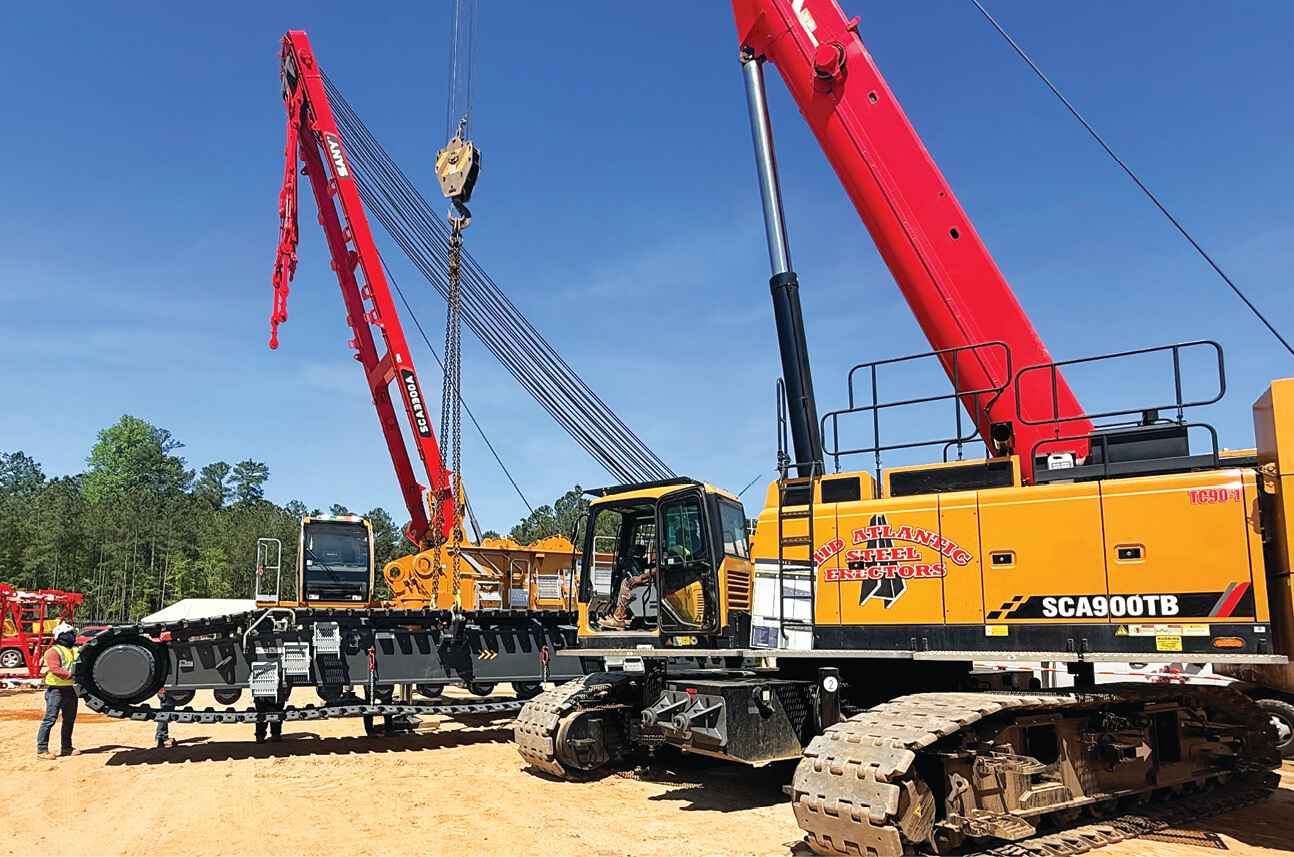
Mid Atlantic Steel Erectors of Midlothian, Virginia, deployed Sany SCA900TB and SCA1600TB telescopic crawler cranes on a massive data center project in Fayetteville, Georgia. The SCA900TB was used both to assemble larger lattice crawler cranes and to handle smaller lifting tasks throughout the project.
Infrastructure and Environmental Construction
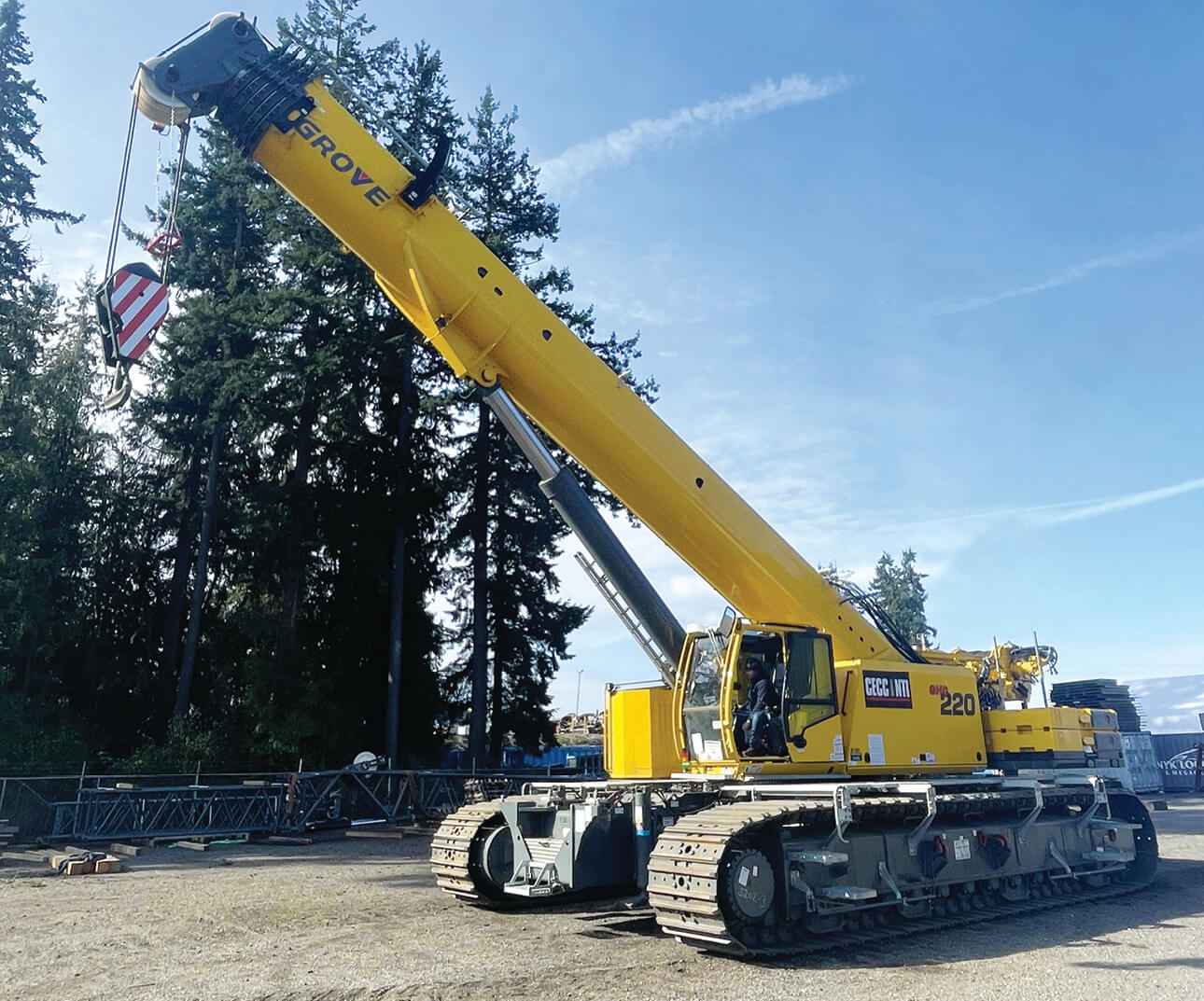
Construction company Ceccanti, based in Tacoma, Washington, placed the first Grove GHC220 in North America into service on the Gravelly-Thorne Connector project, a 1.3-mile shared-use path along Interstate 5 in Lakewood, Washington. Afterward, the crane was scheduled to move to Seattle’s West Duwamish Wet Weather Storage project, where it would lift gang forms exceeding 36 feet in height and perform walk-under-load operations while constructing a 1.25-million-gallon underground stormwater and wastewater storage facility.