Reducing Risk
At Bay Ltd. crane simulation training is building a safer workforce
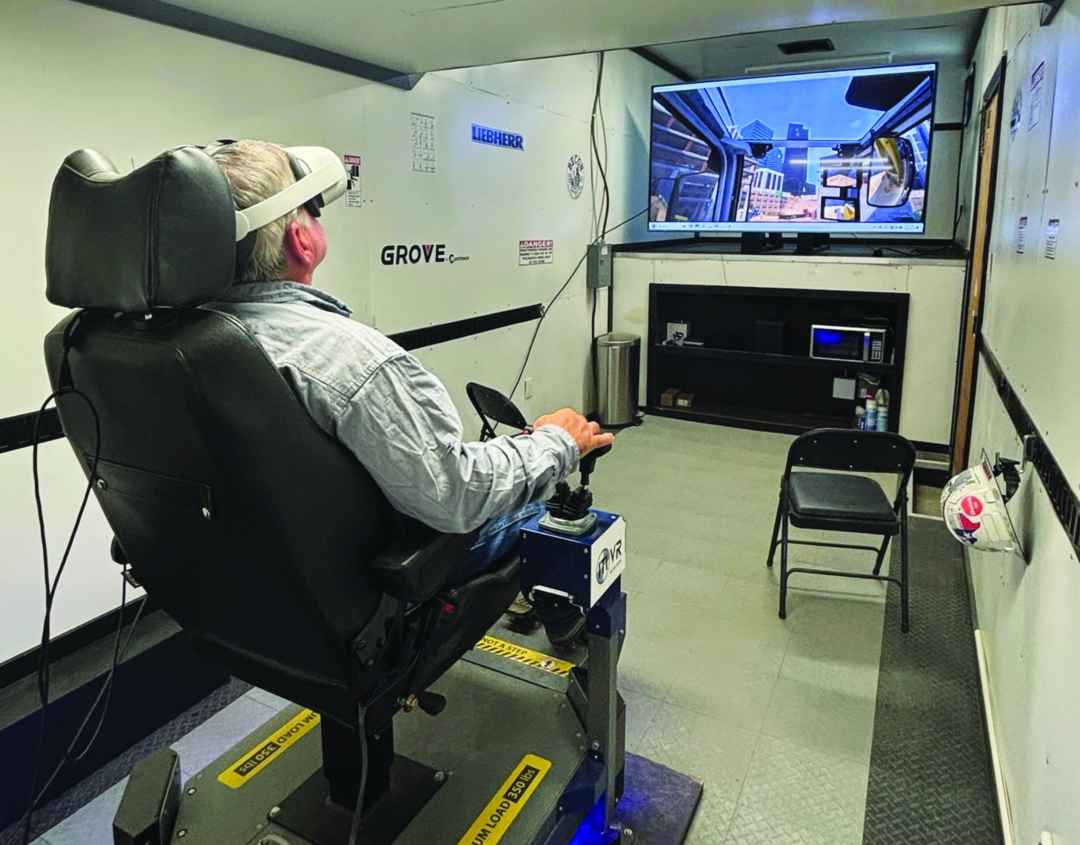
Bay Ltd., a full-service contractor in the industrial and construction sectors is now taking its training efforts to the next level with ITI’s crane simulators. The simulators, noted Michael Bieber, safety supervisor at Bay Ltd., play a key role in developing skills, improving safety and engaging the next generation of crane operators.
With a deep background in rigging and crane operations, Bieber knows firsthand how simulation training can supplement in-person instruction, bridge knowledge gaps and create safer, more efficient operators.
Training Evolution
Before introducing crane simulators, Bay’s training program was primarily instructor-led. Although effective, Bieber related, this approach had challenges, such as limited operator seat time and the need for significant supervision during hands-on crane practice.
“We still do instructor-led training, but the simulator adds a whole new level of preparation,” Bieber explained further. “Operators can get hands-on time without needing to set up a real crane, which frees up resources and increases their confidence before getting into the real thing.”
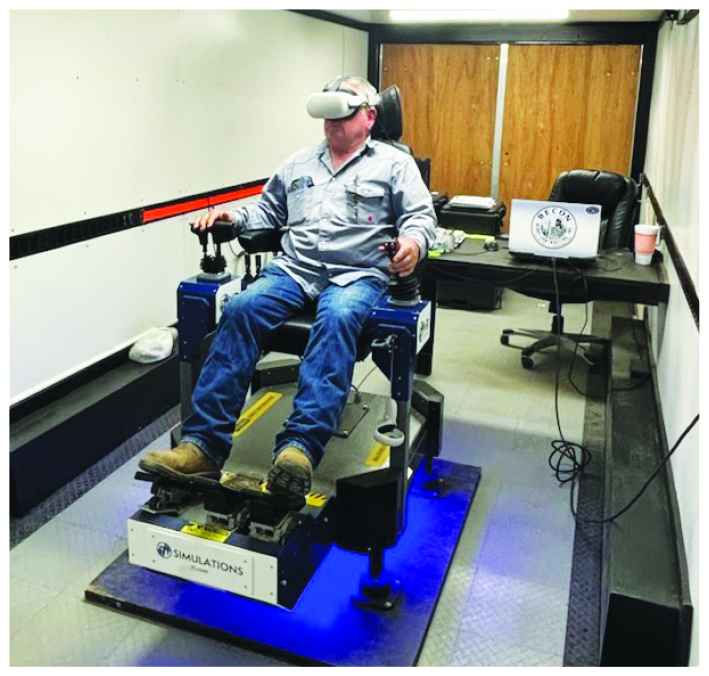
Bay uses two ITI motion-based crane simulators to train over 100 operators, one at its main yard in Corpus Christi and another in West Texas. The simulators are equipped with a belly box for realistic operator training and can simulate nine different crane models, enabling operators to develop skills across various equipment types.
Assessing New Hires
Hiring crane operators comes with the challenge of needing to assess an operator’s actual skill level, Bieber noted. To address this, Bay Ltd. has integrated crane simulators into its hiring process, using a fully immersive 360-degree Virtual Reality (VR) experience to gauge mechanical aptitude and on-the-job decision-making.
“Unlike traditional methods, simulators allow operators to react to real-world scenarios, including failures and mid-lift complications, providing a higher level of evaluation,” Bieber said. “When someone applies for a crane operator position, we can’t just take their word for it when they say they have experience. The simulator helps us verify their skills in a safe and controlled environment.”
By running new hires through the simulator, Bay can spot weaknesses early and provide targeted training before operators handle real-world projects. “It’s helped us catch things we might not have seen otherwise,” Bieber related. “If someone struggles with a particular skill, we can work on that before they’re out in the field where mistakes can have serious consequences.”
Safety Success
With many projects taking place in high-risk environments such as refineries, construction sites and wind farms, safety is a cornerstone of Bay Ltd.’s operations. By practicing in a controlled, immersive environment, operators develop the skills and procedures needed to anticipate and avoid hazards on the job, Bieber noted, experiencing realistic challenges without real-world risks.
“Proper training is essential to prevent accidents and ensure safe operations,” Bieber said. “The crane simulator is an invaluable tool in refreshing important safety lessons and helping operators recognize and avoid common crane-related dangers like two-blocking, outrigger failures and operating with a lack of situational awareness.
“The simulator mimics real-world scenarios, allowing operators to experience potential hazards in a controlled environment that looks like the real thing,” Bieber added. “This realistic training helps build situational awareness, which is critical for preventing dangerous incidents.”
Supporting Career Growth
Bay Ltd. requires its operators to complete four hours of training each year to keep their skills up to date. While taking operators off the job for training can be challenging, the ITI simulators make it more manageable and cost-effective by enabling on-site training that doesn’t disrupt project schedules.
The company is also dedicated to providing its employees with growth and career advancement opportunities. The simulator plays a role in helping riggers and aspiring operators develop their skills and climb the career ladder.
“Anyone who wants to learn or sharpen their skills is welcome to come in and train,” Bieber said. “Bay encourages employees to pursue their chosen career path through a mix of hands-on experience, instructor-led training and simulator practice to build their confidence and expertise for real-world crane operations.
“Once operators have completed their instructor-led courses and certification and spent time in the simulator, it doesn’t take long for them to be field-ready,” Bieber continued. “Within a couple of weeks, they can operate a crane confidently under supervision.”
The ITI crane simulator has proven particularly popular with younger operators at Bay, who are more accustomed to using technology in their daily lives. “For them, it’s like a video game,” Bieber pointed out. “Some even downloaded crane simulation apps at home to practice before coming in for training.”
While older operators were initially skeptical, many have embraced the technology after experiencing its realism and seeing its benefits. “At first, some of the more experienced operators didn’t take it seriously,” Bieber admitted. “But once they saw how realistic it was, they came around. Now they say it feels just like being in the cab of a crane.”
Scalable Training
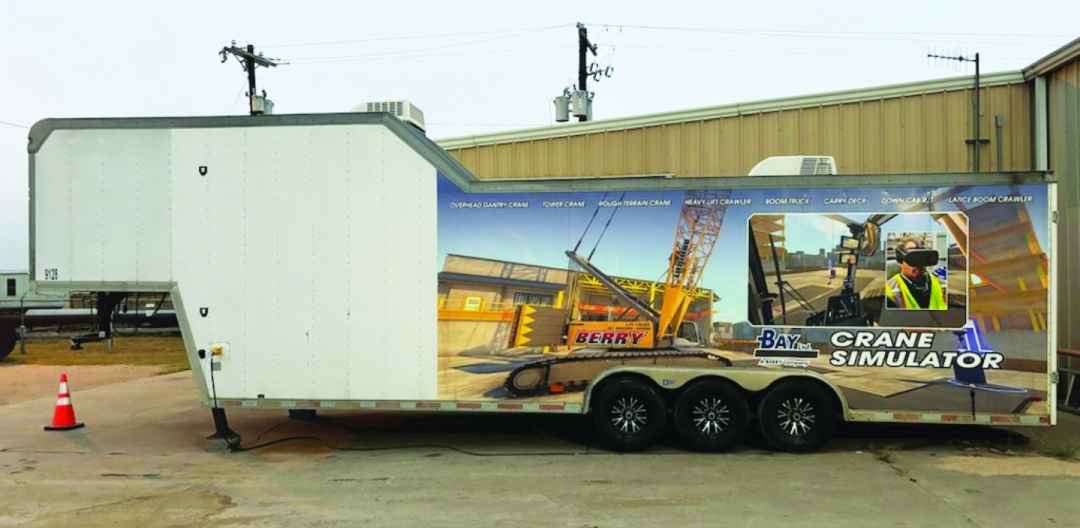
To make training even more accessible, Bay Ltd. developed a mobile VR ITI simulator. The enclosed trailer is both a recruiting tool at job fairs, high schools and community events, offering people a chance to experience crane operations first-hand, and a traveling training unit.
“The trailer allows us to train employees at remote sites,” Bieber related. “It’s multi-purpose and it saves time and keeps our training consistent across locations.”
As Bay continues to expand its operations, ITI’s crane simulators will remain an important part of its training strategy. The program’s scalability and flexibility, Bieber pointed out, ensure that Bay can meet the evolving needs of its workforce while maintaining high standards of safety and performance. “We definitely see simulation training playing a bigger role in the future,” he added.
Crane simulators have helped Bay Ltd. modernize its training program, enhance safety and create opportunities for career growth. From assessing new hires to developing the next generation of crane operators, the simulator is an essential tool in Bay’s training arsenal.