Report Examines Rigging and Signaling Practices in Crane Operations
New research examines rigging, signaling, communication, training, and other safety factors in crane operations.
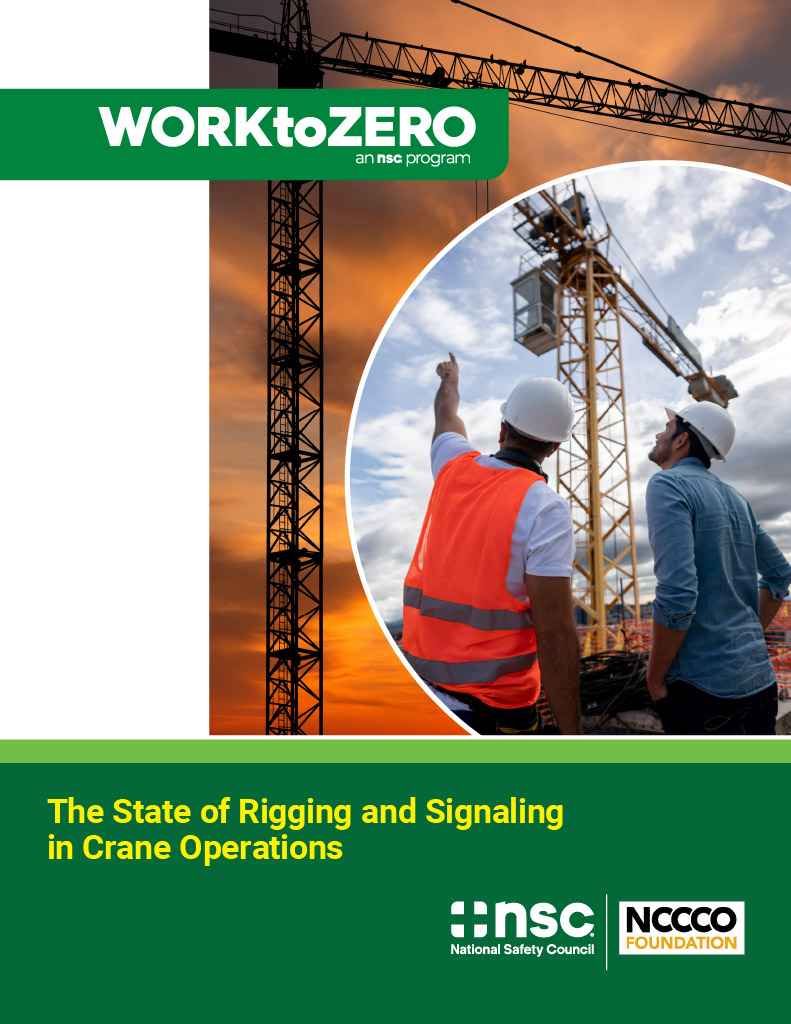
September 21, 2026 - The NCCCO Foundation (NCCCOF) and the Work to Zero program at the National Safety Council (NSC) have published a research report examining current rigging and signaling practices in the crane industry and their effect on safety.
The report, "The State of Rigging and Signaling in Crane Operations", establishes a baseline of current practices and examines technical, human, and organizational factors that can contribute to risk during crane operations.
According to the report, 98% of survey respondents experienced communication challenges during crane lifts within the previous 90 days. The finding points to communication and pre-lift planning as areas examined in the report.
The research also found that nonstandard signaling practices contribute to confusion and increased risk on jobsites.
The report identified production pressure, inadequate supervision, and worker distraction as human and organizational factors that contribute to unsafe rigging practices more frequently than technical errors.
The study also found differences in how certified and non-certified personnel were viewed by their peers. Certified riggers and signalpersons were consistently viewed as more effective than non-certified personnel, according to the report.
The findings suggest standardized training and certification can help establish greater consistency across the workforce.
“The report confirms the importance of rigging and signaling in conducting a safe lift and highlights the fact that inconsistency in training and standardization in these key roles is increasing the risks for those working with cranes on the jobsite”, said T.J. Cantwell, NCCCO Foundation executive director. “It’s clear implementing the recommendations in the report such as reinforcing the use of standard signals, supporting certification requirements for riggers and signalpersons, and investing in site-level supervisor training could make a significant impact on crane safety,” Mr. Cantwell added.
The NCCCO Foundation will host a webinar September 29 to discuss the research findings and recommendations. Industry speakers from Morrow Equipment will also participate in the webinar to provide ideas and tips for making rigging and signaling safety a priority.
"The State of Rigging and Signaling in Crane Operations" and other safety research reports are available through the NCCCO Foundation.