Safe Crane Operations Depend on Choosing the Right Ground Protection
Matching Solutions
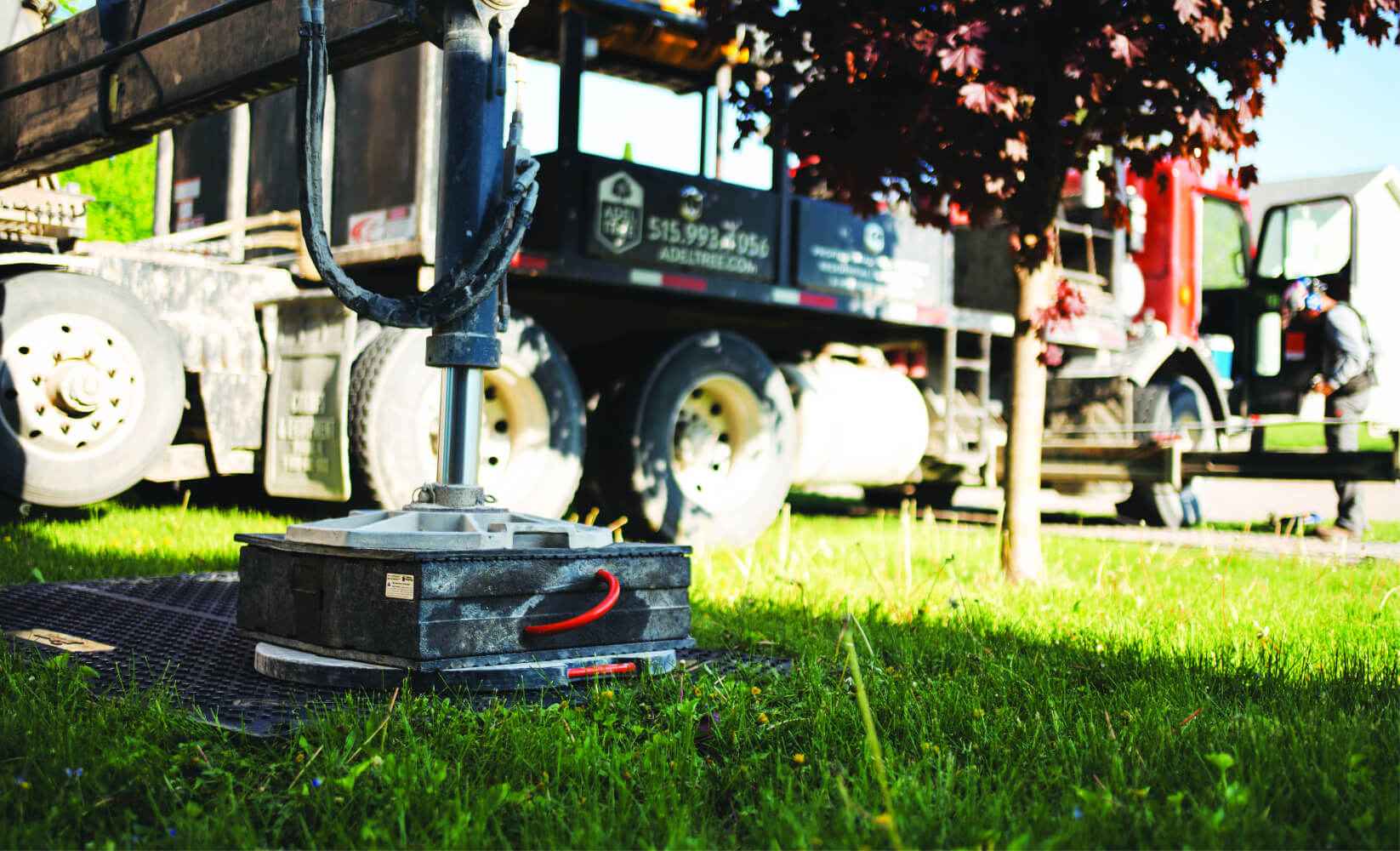
On most crane jobs, ground conditions are evaluated early, but site access is often addressed later once equipment is already mobilized. That sequence can create problems. If stable access routes, work areas and laydown zones are not properly established, site conditions may not provide the consistency or support required for equipment to perform as intended.
Site access is fundamental in crane operations, supported by industry standards that call for adequate ground conditions and supporting materials to safely support equipment. The challenge is not recognizing the need, it’s determining how to match the right solution to the equipment, the ground conditions and how the site will be used.
Site Access
The terms ground protection and site access are often used interchangeably when it comes to mats, but they serve different purposes:
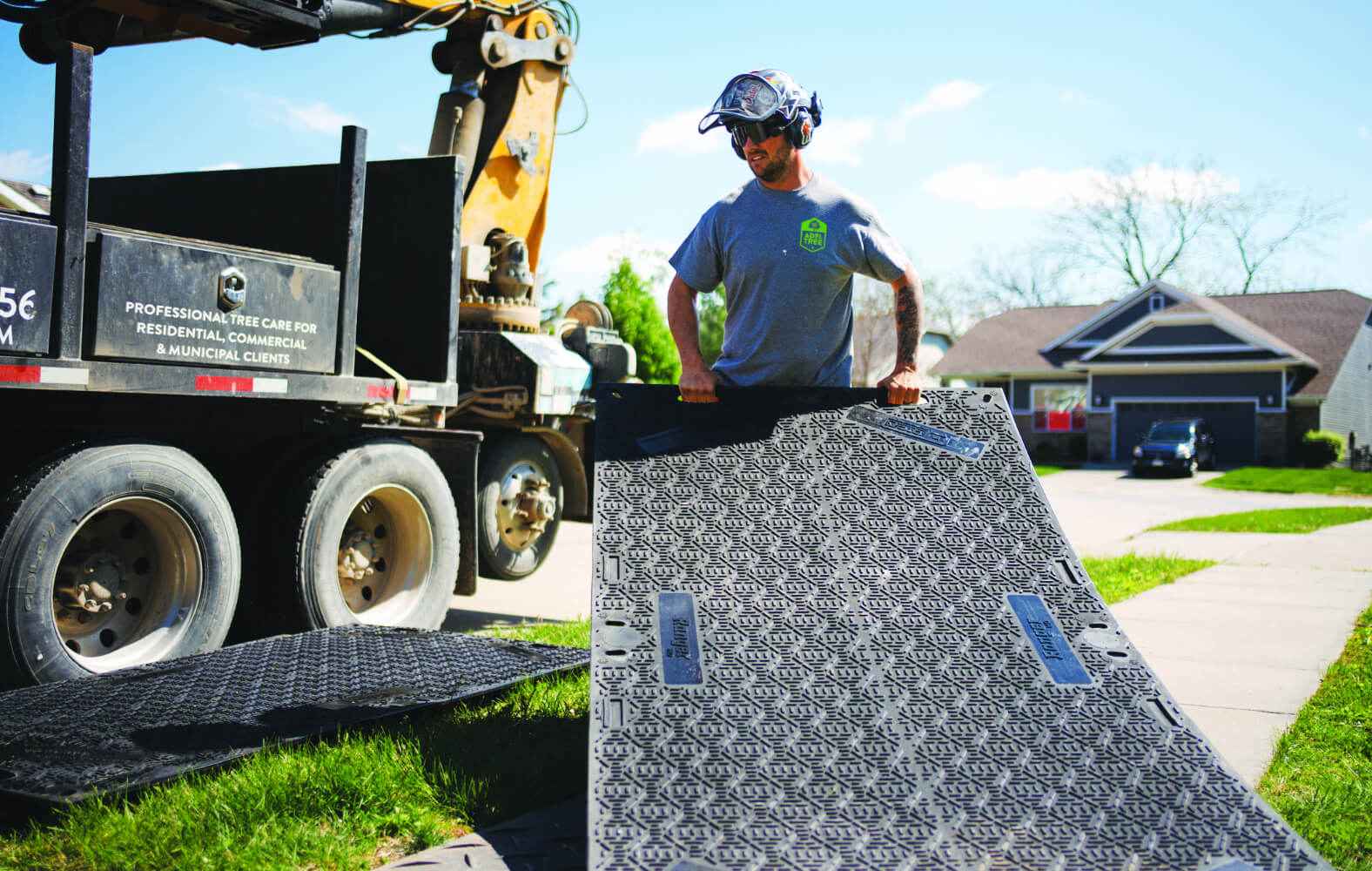
- Ground protection mats are typically used to minimize surface damage when working in established residential and commercial sites. They are usually smaller, lighter and deployed by hand.
- Site access mats are used to create a stable temporary roadway and/or working surface for equipment operating at an active construction site.
- Access mats are typically larger, heavier, more structural and due to their size and weight, must be deployed using equipment.
In crane applications, site access is generally the priority. Equipment must be able to move across the jobsite, reach its working position and operate from a surface that is firm, drained, graded and level. Those conditions are not always present naturally and often must be created.
In addition to temporary roadways, site access also includes stable work areas such as laydown or staging zones. Understanding how each area will be used is the first step in selecting the right approach.
Site access requirements are determined by understanding and evaluating the equipment, the ground and the duration. Different types of equipment impose loads in different ways.
Wheeled equipment concentrates weight on smaller contact areas, creating higher point loads that must be accounted for. Tracked equipment distributes weight over a larger area, reducing ground pressure. However, it introduces lateral forces when turning that can shift or displace materials if the surface is not stable or properly connected.
Ground conditions must be evaluated to determine how those loads are supported. Soil composition, compaction and moisture content all influence product selection. Surfaces that appear stable may not remain that way once equipment is introduced or environmental conditions change. Rain, freeze-thaw cycles and heavy travel can quickly alter ground conditions, reducing its ability to support loads.
In addition to the equipment being used and the ground conditions, the duration of the job needs to be considered. Longer duration jobs with heavier travel will typically require larger access mats.
Applying Principles
With those variables understood, site access decisions can be applied to specific areas of the jobsite.
Access routes must support repeated equipment movement across varying terrain and conditions. These routes are subject to dynamic loading, changing weather and frequent use. The surface must remain stable and consistent to allow equipment to move safely and efficiently without becoming stuck or unstable.
Stable work areas are where equipment operates. These areas must provide a level and predictable surface that allows operators to maintain control and operate within equipment tolerances. Any movement or inconsistency in the surface can affect stability and performance. Even minor changes in the supporting surface can result in shifting or uneven load distribution, which may impact how the equipment responds during operation.
Laydown or staging areas are used to establish a uniform surface for positioning materials prior to use. These areas are often subject to static loads over extended periods. In addition to supporting weight, they must allow for safe rigging and handling. In some cases, materials are elevated using cribbing to allow access for slings or rigging hardware.
Each of these applications introduces different loading conditions and operational requirements. Treating them the same often leads to performance issues or increased risk.
Selecting Ground Protection
Once the application, equipment and ground conditions are understood, the focus shifts to selecting site access mats that provide the required support for equipment, ground conditions and duration of the project.
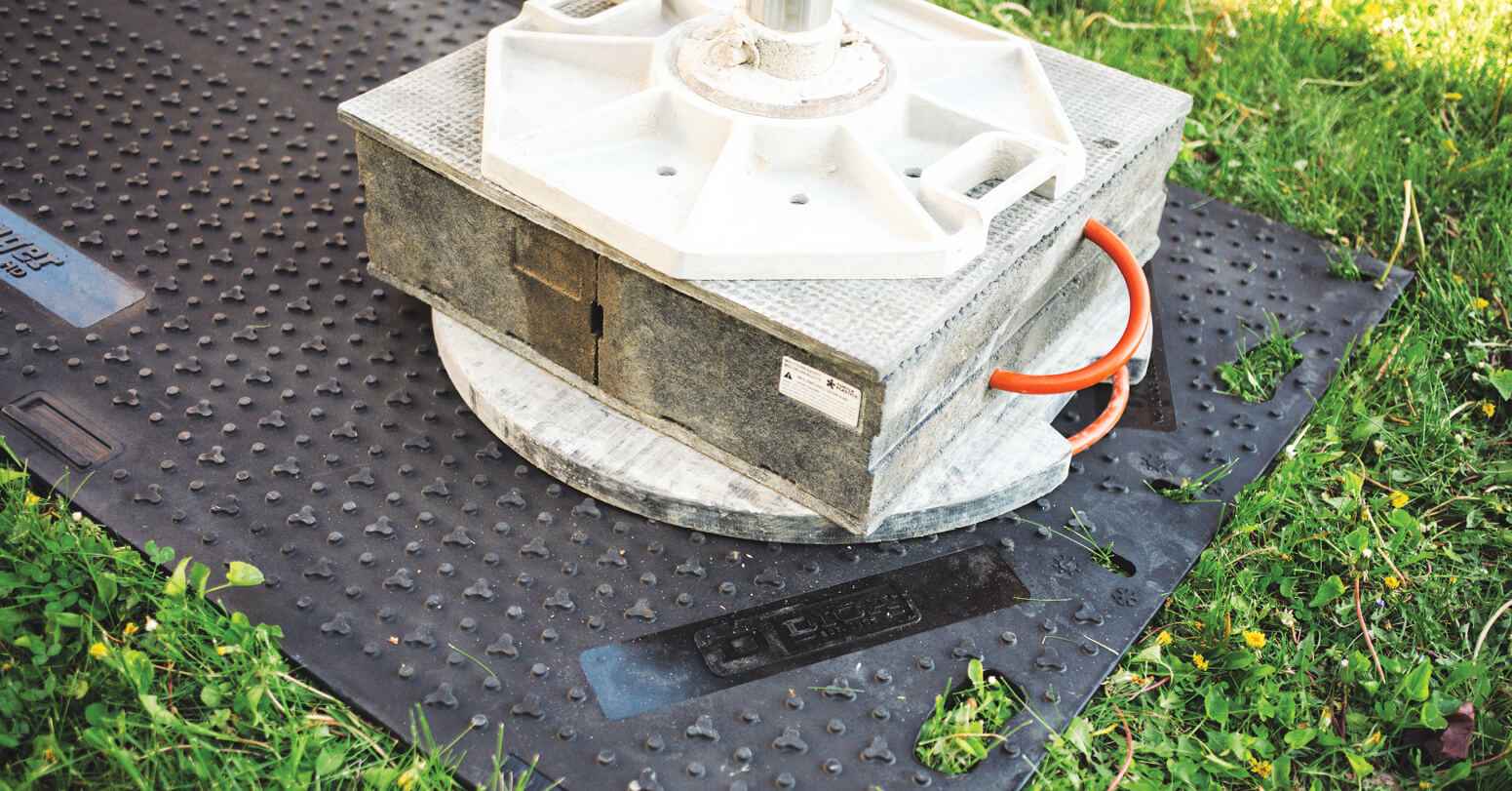
For applications involving repeated traffic or longer durations, stability is critical. Access mats must remain in place and function as a continuous surface, minimizing movement and reducing the need for ongoing adjustment. Mats that connect to each other become an important consideration, which improves consistency and can reduce localized stress.
On uneven or variable terrain, the ability of mats to conform to the surface improves contact and minimizes scenarios where the mat is unsupported, and not in direct contact with the ground. This helps prevent localized failures. Mats help distribute loads, but they may not be able to compensate for all unknown subsurface conditions.
When working in ground that is water saturated such as marshes and swampy areas, selecting mats that connect and are buoyant is a critically important consideration. In many cases several layers of mats are required to provide the necessary support for equipment where there is little to no support from the ground. In these cases, creating a continuous interlocking surface is essential. Buoyancy helps provide additional support which prevents mats from getting stuck in the mud.
Traditional materials such as timber mats and steel plates are often used for site access. Timber can lack uniformity, resulting in inconsistent support. Steel plates can deform and do not transfer loads between plates, causing each piece to act independently. Engineered mats provide consistent and predictable performance.
Common Missteps
One of the most common misconceptions is that employing ground protection or site access mats automatically resolves ground-related challenges. In reality, effectiveness is limited by the conditions beneath them and how they function together as a system.
Access mats that are not connected may shift and will behave independently under load. This becomes particularly important with tracked equipment, where turning forces can cause individual mats to move or slide out of position if they are not connected.
Another common issue is assuming uniform conditions across a site. Ground conditions often vary, especially on construction sites where excavation and backfill create inconsistencies. Identifying these variations early and selecting the right products for each area is essential to avoid unexpected instability.
Handling and installation also present safety risks. Mats can be large, heavy and awkward to handle due to their size and shape. Improper lifting techniques, inadequate support during transport or unbalanced loads can lead to injuries. Proper equipment selection, controlled handling procedures and clear work zones are essential for safe installation and removal.
Integrating Lift Planning
Site access should be addressed as part of the overall lift planning process, not as an afterthought. Evaluating ground conditions, understanding equipment requirements and selecting appropriate site access mats before arriving on site allows crews to establish the conditions needed for safe operation. Industry guidance emphasizes the importance of firm, drained and level surfaces — conditions that often must be created rather than assumed.
Integrating site access into lift planning improves consistency, reduces uncertainty and helps maintain safe operating conditions from start to finish. Planning also requires situational awareness. Conditions may change over time and ongoing evaluation is necessary to ensure that the supporting surface continues to perform as expected throughout the duration of the job.
Safe crane operations depend on more than the crane itself. Cranes must be able to access the lifting area, must have a stable working area and be able to reach materials in a laydown yard. Defining how the site will be used is the first step in selecting the right site access mats based on how they will perform under real conditions.
Proper planning and informed decision-making improve stability, reduce risk and support safe, efficient operations across the jobsite.