Taking Their Seat in the Industry
Stories and voices behind the women in crane and rigging
If they don’t give you a seat at the table, bring a folding chair.” - Shirley Chisholm, U.S. Congresswoman.
The crane and rigging industry is a male-dominated field, which should come as no surprise to those in it. Yet the women who have built careers here have done more than simply enter the field; they have established themselves as operators, owners, executives, suppliers and technical experts. These women have decades of experience and the stories to accompany them.
We asked them to reflect on the paths that brought them here, the obstacles they’ve encountered, how the landscape has shifted and how it’s possible to help more women succeed and feel supported in the industry.
Each narrative is practical, candid and often hard-won. Together, these experiences shape a snapshot of where the industry stands and where it may have room to grow.
Kate Lampson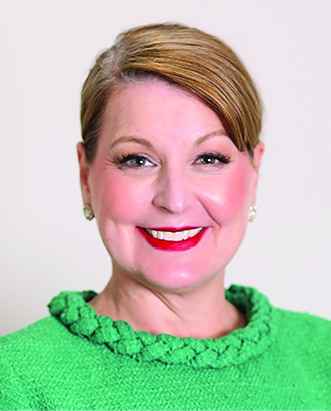
Kate Lampson, director of business development and marketing for Lampson Inter-national, has been in the industry for more than 20 years, starting in high school and college on summer and winter breaks. Lampson International is a third-generation family-owned and operated heavy lift and haul construction corporation, celebrating 80 years in business.
In the past two decades, Lampson’s personal philosophies have served her well for this line of work.
“I believe in keeping my head down, working hard and educating myself,” explained Lampson. “I also believe in tuning out the cynics and naysayers and instead focusing on what is important and necessary.”
According to Lampson, one of the biggest challenges that women face is the idea that they may be less knowledgeable about the construction industry than men, and therefore bring less to the table.
“In spite of that, I do feel that we are overcoming this misconception through our hard work, tenacity, sheer drive and ambition,” said Lampson. “By refusing to take no for an answer, educating ourselves about our industry and continuing to strive for what is important to us and our careers, regardless of what anyone thinks, we have broken down and will continue to break down barriers.”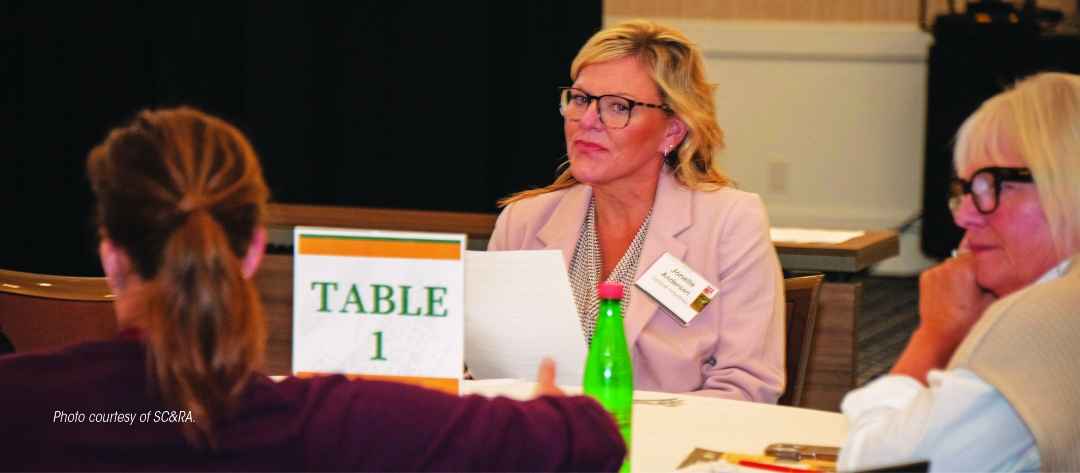
Various industry foundations, such as the Specialized Carriers and Rigging Association (SC&RA), the National Commission for the Certification of Crane Operators (NCCCO) and the Associated General Contractors (AGC), are promoting women in the industry through the programs that they offer. Combined with the active recruitment of women at all levels in the industry, Lampson is optimistic that we will see more women in future generations establishing a career in construction.
“We as women are given a unique perspective as well as an ability to see the world through empathetic yet analytic eyes,” notes Lampson. “By thoughtfully assessing each situation and making sound business decisions that are to the benefit of our families, our companies and our industry, we make ourselves an asset.”
Shelly Gayring
Director of Marketing at Select Crane Sales, Shelly Gayring, started her career in the crane and rigging industry in 2014, but has more than 20 years of experience in marketing and growth roles. Select Crane Sales is a full-service crane dealer that supports customers worldwide, handling new and used crane sales.
Gayring’s start in the industry was not only a new challenge but also presented a completely new territory, with its own hurdles.
“It’s got a learning curve,” Gayring said. “You earn credibility by taking the time to learn about the equipment and respecting the expertise of operators, lifter sales reps and technicians.”
For women entering the industry, Gayring emphasized that it is highly specialized. Candidates need to be able to hit the ground running, but also have the required training beforehand.
“Even related backgrounds don’t always translate one-to-one, because the equipment, safety expectations and jobsite realities are unique,” explained Gayring. To succeed in the industry, “the most effective support is structured, practical training that defines clear entry points, on-the-job learning with experienced teams and clear growth pathways.”
With the right support and instruction, the right people can be developed. For Gayring, clear training, mentorship and advancement opportunities based on performance can help retain workforces and build stronger teams.
“Women already play critical roles in keeping many companies running day to day, and I’d like to see more intentional pathways into operational and leadership roles for the women who want to grow there,” Gayring concluded.
Becca Kroslak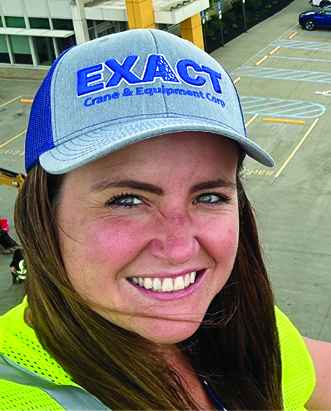
Becca Kroslak has been in the industry for four and a half years, serving as director of marketing for Exact Crane & Equipment Corp, which specializes in comprehensive lifting solutions for a wide range of applications and is an authorized distributor for leading manufacturers, including Tadano, Manitex, Jekko and others.
Kroslak began her career in marketing, first driven by creativity, but was drawn into the industry by the people and, of course, the cranes.
According to Kroslak, “getting to know customers is more than a job, it’s about their livelihood, and we feel fortunate to be part of their story... The cranes, well, my coworkers joke that I could talk about cranes anytime, anywhere.”
“When I first started, I thought I needed to learn every specification on every piece of equipment,” Kroslak explained. However, after some time in her position, she realizes understanding the customers’ business needs and job requirements are the most important details to focus on.
For Kroslak today, “there will always be challenges, but understanding what a piece of equipment is used for and its limitations is important to me...
“I sell crane attachments, and knowing what it can and cannot fit is important. Selling a customer the wrong attachment not only costs them money but downtime on their jobsite. As a woman, it is important to have integrity: being knowledgeable about the product, but humble with what we know and honest about what we don’t.”
In an industry that requires constant critical thinking and adaptability, Kroslak also believes that more women in leadership roles can provide different perspectives and experiences, encouraging open communication and improved collaboration on jobsites.
“The unique qualities that women bring to the table have become prevalent, whether out in the field in an operator’s chair, in the office running a business, on the road talking to customers and more, there are ample positions for women to help a company flourish,” said Kroslak.
Jennifer Gabel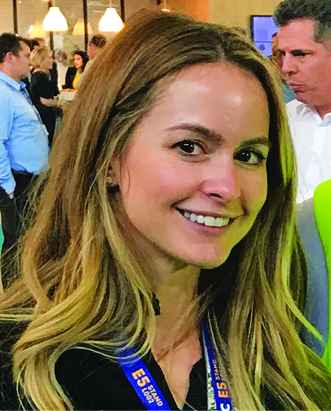
“If we’re not counting wreaking havoc in my dad’s office as a kid, I started helping with administrative work in the summers from the age of 13,” describes Jennifer Gabel, consultant for Bay Crane, when we asked how long she has been in the industry. “He’d bring me to jobsites, and I had two choices: sit in the car bored or get out and ask questions.”
However, she decided not to work in the industry right away. “I wanted experience outside both my dad’s shadow and the industry itself,” Gabel explains.
Aftering working in operations, finance, sales, planning and logistics, learning how to lead teams and broadening her perspective, Gabel bought the majority of what later became JK Crane, stepping in to leadership at the age of 30. She now works for Bay Crane, a crane rental and specialized transportation company.
“What really kept me here is the people,” said Gabel. “There’s an authenticity in this industry that I deeply respect. Many of the individuals in crane and rigging are direct, hardworking and grounded.”
At the start of her career, Gabel recalls that age was as big a factor as gender, “I focused on listening, learning and then demonstrating value through action. Over time, consistency speaks louder than titles… I’ve found that confidence and preparation go a long way.”
While there are more women in the industry today compared to ten years ago, she still wishes to see more in the field.
“Many women don’t feel safe or welcome in this industry, whether that’s due to ill-fitting personal protective equipment (PPE) or behavior that isn’t addressed quickly enough,” said Gabel. “Too often, women feel like they must advocate for themselves in those moments, and that’s not always easy.”
She finds that the SC&RA women’s executive roundtable can be a good support system, where they spend most of their time talking about business.
“Encouraging groups and conversations like these creates a supportive environment,” explains Gabel. “Companies that take the initiative to build diverse teams benefit from broader perspectives and stronger collaboration.”
Paula Bell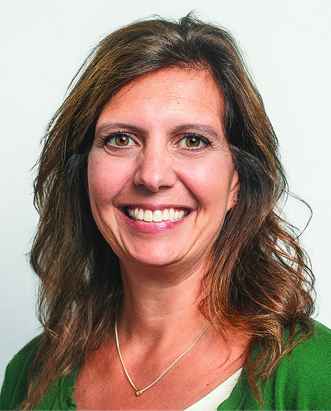
Arrowhead Winch’s Director of Marketing, Paula Bell, has 25 years of experience in manufacturing. Arrowhead Winch engineers and manufactures industrial hydraulic winch, hoist and drive systems, working with major original equipment manufacturers (OEMs) for truck and mobile cranes as well as heavy haul trailers.
Though she started her career in agency and services, she wound up in manufacturing.
“I got here a little by accident, but once I got involved, I knew quickly that I had found my home,” Bell noted.
“I’ve always had to work a little harder to prove myself and my abilities,” she recalled when asked about the challenges she faced at the start of her career. “The teams I have been lucky to work with have been supportive, but visibility and recognition in organizations has not always been comparable.”
With 25 years below the belt, however, Bell has noticed some changes in the industry, particularly between women.
“When I started, there were only so many ‘seats at the table’ given to women, so there tended to be a lot of competition,” she said. “That has shifted to be more positive. Women seek out peers and mentors who can relate, are a ‘safe’ sounding board and provide support. Challenges and biases still exist, but there is room for all of us now, and we want to help bring each other up!”
Bell believes in having a strong network to talk with freely and to lean on when needed, but she is also driving the revival of the employee resource group within her organization. She noted it will provide some focus on the unique needs of women in the industry.
“We need to continue to facilitate opportunities to grow our network and work together to elevate women in the industry,” said Bell. “Nurturing relationships is critical. As we are put into more positions to drive results, we will prove that we belong!”
Cheryl Fry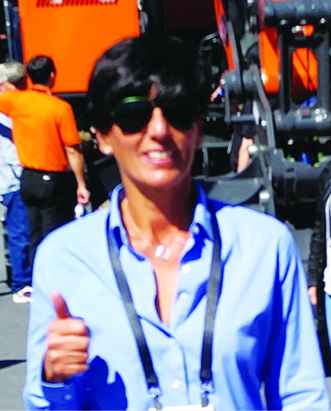
“I began working with Harry about six months after he established Harry Fry & Associates (HFA) in 1995,” recalled Cheryl Fry. “At the time, I was working in property management, and I had no prior experience in the finance industry. But I’m a quick learner and learned on the fly from Harry!”
HFA, established by “Fry, the Crane Finance Guy,” is a family business that finances all types of cranes and heavy equipment, working with companies ranging from small owner-operators to large, publicly traded companies.
Looking back, Cheryl believes that the family-business aspect of the industry drew her in.
“Many of our clients are family-owned businesses, just like ours,” she said. “Many of our transactions are done working directly with a family member.”
“In the early days, if a man called me ‘hon,’ ‘-dear,’ etc., I had to understand that this may not be coming from a place of disrespect,” Cheryl noted. “It is still a male-dominated industry, and women might understand that men may work much differently than women overall.”
Even with more women in the industry today, especially in leadership roles, Cheryl urges the industry to have more information on human resources-related issues that might be specific to a woman-owned business.
“Discussion panels or roundtables of women-owned businesses might be helpful for women to discuss their specific issues in a more relaxed atmosphere, where attendees could ask questions and have an information discussion,” she explained.
Even so, for those looking to join the industry, Cheryl believes, “It’s a great industry to work in. There are many aspects of the industry that could be interesting to a young woman. I would suggest that a young woman intern with a crane company to see all of the various aspects of the industry.”
Tonya Fry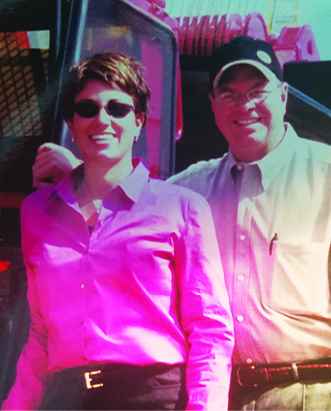
Tonya Fry, vice president of HFA and 2024 Allied Industries Group chairperson, began working with HFA in 2004 with a background in investments and banking, but no prior equipment finance experience other than answering phones in a summer high school job with HFA.
“The biggest hurdle for me early on was to not take things personally,” Tonya noted. “Being that I was young and a woman in the industry, there were many customers who only wanted to speak to Harry. They felt that he was more knowledgeable. Over time, I was able to prove myself to many clients and they were comfortable working with me.”
Tonya’s experience also highlights the importance of mentorship, community and leadership for women in the field today.
“I came into the industry about eight years after Cheryl, and I give credit to those few who started in the industry because they paved the way for women in our industry today,” she recalled. “Cheryl was a great role model for me. Today, there are many women owners in the industry. It’s been very exciting for us to experience these changes and see women thriving in the work.”
Though there has been great strides for women in the industry, Tonya still believes there could be more done for career outreach to women.
“It is not an industry that women are immediately drawn to,” she explained. “Reach out to women early in their career, such as in high school, trade school and college, and educate them on the job opportunities in the industry.”
Jo Roberts
Jo Roberts, a member of SC&RA and owner of LUBE-A-BOOM, a lubrication provider to the lift, mining, farming and marine industries, has been in the lifting industry for 22 years.
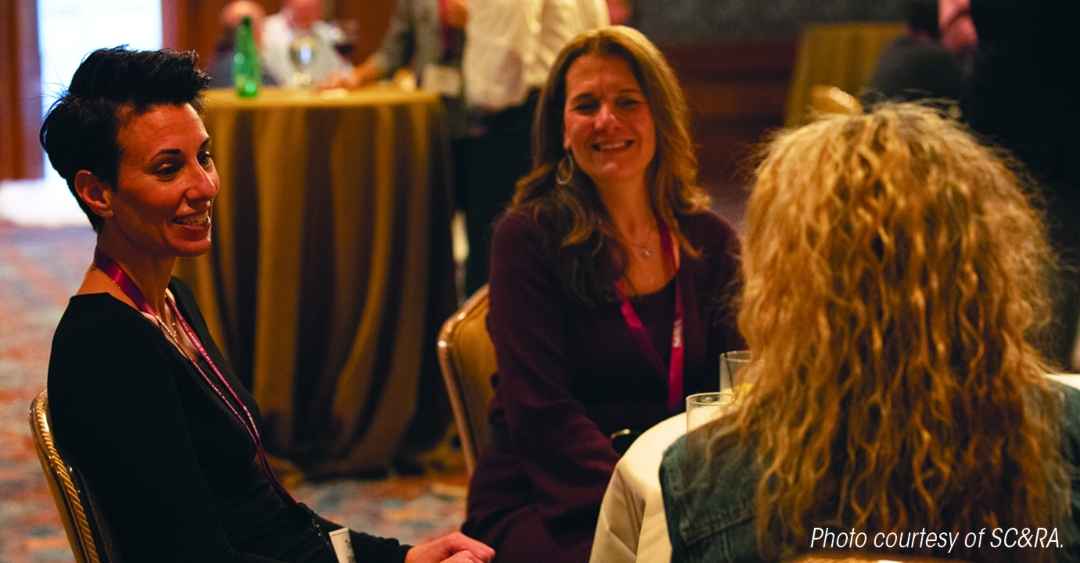 Roberts began her career in the oil and gas industry when she met Harley Wilson, the founder of LUBE-A-BOOM and a Grove engineer, who became Roberts’ mentor.
To Roberts, “mentorship is very important. Find someone who is willing to help you and guide you along.”
Clear, structured and paid apprenticeship pathways can also help advance careers in the industry, according to Roberts, along with outreach through trade schools and community colleges and entry roles that include real training.
She also suggests a redesign of PPE, so there is gear that will actually fit women’s bodies. “Ill-fitting gear is a safety issue, not a comfort issue.”
Roberts believes that the crane and rigging industry can also benefit from having more women in leadership positions. “Diversity wins! It brings practical advantages to an industry that deals with safety issues, talent shortages and complex projects.”
Amy Niese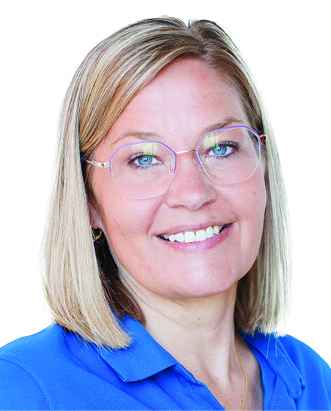
Amy Niese’s career with Nelson Manufacturing, a manufacturer of custom trailers, boom dollies and boom launch trailers for the crane, rigging, heavy haul, construction and aerospace industries, began in 2012, when she joined the company as an owner with her husband, Tony. As the treasurer for Nelson Manufacturing, she has also held roles focusing on human resources, accounting and purchasing.
“I was drawn to the industry as everyone is close-knit,” Niese said. “I attended several trade shows with Tony and was impressed at the networking that took place, the friendships that were developed and the professionalism of the industry.”
In the beginning, she had to develop a new network, including colleagues, suppliers and industry connections.
“My previous work experience was in the tire industry,” she noted. “As you can imagine, the crane industry is vastly different! Our employees were great as they taught me about our product line, our supplier base and the crane industry.”
“We all learn from our personal experience and the mentorship of others within the organization,” Niese continued when asked about the benefit of women in operational and leadership roles. “The more experience we have in multiple facets of an organization — as operators, technicians, office roles, business leaders, etc. — the more well-rounded we become. This gives us different perspectives, the ability to collaborate and overall to be a more cohesive business unit.”
Niese sees endless opportunities for women in the crane and rigging field.
“As the demand for skilled operators, technicians and business leaders continues to increase, we will continue to see more women fill these roles,” Niese explained. “Today, there are more resources available to help women succeed. All individuals need to use the resources available to them — hands on training, education, internships, etc. — to continue to develop themselves both personally and professionally.”
She believes that in an organization, it’s vital to treat all employees with the same level of respect, fairnes and equality.
“An organization is only as good as its employees,” she concluded.
Tawnia Weiss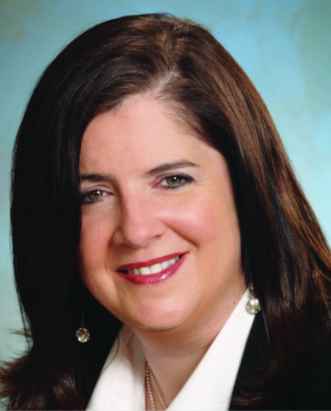
Co-Founder and President of A1A Software. LLC, Tawnia Weiss, has been in the crane industry for 26 years, starting as salesperson for Compu-Crane before co-founding A1A Software in 2006 with her husband Brad. A1A Software develops specialized software solutions for the crane, rigging and heavy lifting industries with a focus on safety, efficiency and smart business management.
“It’s been an incredible journey — from hands-on sales to leading a company that develops industry-leading tools like 3D lift plan and the A1A product suite,” Weiss recalled. “When I entered the crane industry, technology was still very new and largely unfamiliar to most professionals in the field. There was a real learning curve — not just for me, but for the entire industry — around how to effectively use, implement and trust digital tools in lift planning, rigging and operations.”
Through persistence, hands-on education and a focus on practical innovation, Weiss overcame these challenges, turning early skepticism into widespread adoption for the industry. Back then, however, there really weren’t a lot of women in the field, even less than there are now.
“More and more women are joining the field, getting certified, such as through NCCCO, stepping into hands-on roles as operators and riggers and moving up into leadership positions,” she stated. “It’s been incredible to see this growth and the real contributions women are making every day. What stands out to me most is how hard our industry works to bring everyone in — no matter their background.”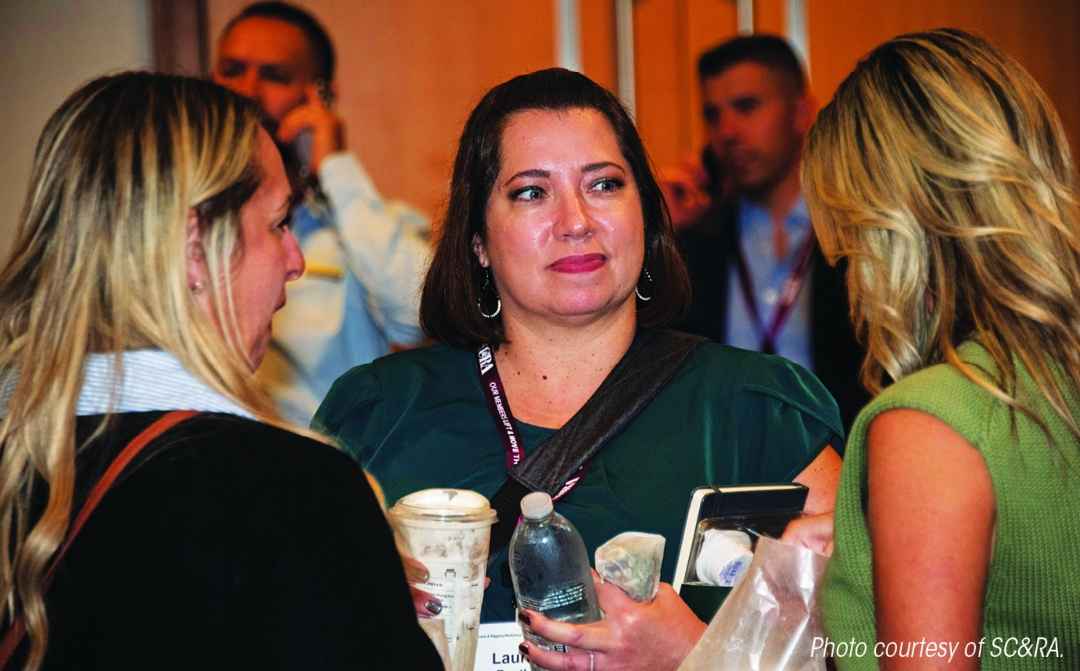
“Companies, associations like SC&RA and training programs are putting real effort into outreach, mentorship and creating welcoming environments,” Weiss continued. “Challenges still exist, of course — things like balancing demanding schedules or navigating a field that’s physically intensive — but the progress is clear, and the supportive culture makes a huge difference in helping women succeed and thrive.”
Barriers & Breakthroughs
Sabrina Crow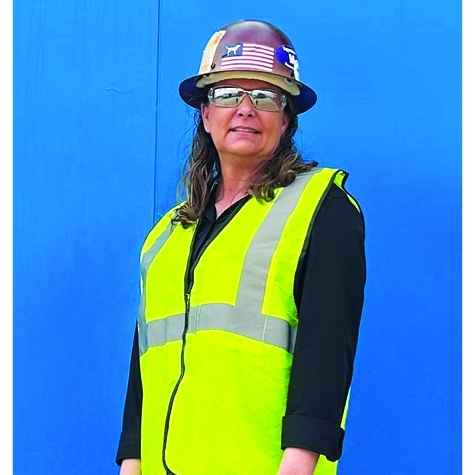
In 2026, only 5% of crane operators are women. While that’s up from less than 3% in 2023, it still leaves many challenges and hurdles for those in the workforce.
Sabrina Crow, a sales representative for Lampson International, recently transitioned from a crane operator with 20 years of experience on truck cranes, rough terrain cranes and crawlers, to her new position, to “get out of the seat and into sales.” Those 20 years, however, aren’t without impressive breakthroughs, memorable projects and lessons learned along the way.
Crow began her career training for dirt equipment certifications when she was asked if she had ever considered running cranes.
“I had not,” Crow explained. “I knew nothing about cranes, except that my grandpa and I bought an old drag line off of a farmer and cut it up for salvage. After some discussion regarding crane certs and the career, I chose to give it a shot. Turns out I was able to operate well, and I was excited to be part of a career that would throw daily challenges at you.”
In the beginning, it wasn’t easy, whether it was the lack of women-tailored workwear, inclusive boot sizing or the challenge of traditional gender roles, Crow had an uphill battle ahead of her. Some of the biggest challenges were communication, being taken seriously by the opposite gender and often getting overlooked for a promotion.
“I always kept in mind the things I learned from the book, ‘Men are from Mars, Women are from Venus,’” notes Crow.
The relationship book by John Gray dives into the differences in communication, emotional needs and behavior between the genders.
However, as Crow eloquently said, “As in life, there will always be challenges.” There are still some differences between men and women in the field, and Crow has learned to just do her job with the belief that doing so will always make her successful in the end.
“I try to make the men I am working with understand that I am here for the same reasons they are… to earn a great living and be part of building this country,” Crow explained. “My crane and operating abilities can make their work a lot easier; we are on the same team with the same goal in mind. Get the job done safely and efficiently and go home at the end of the day.”
While there have been great strides in the industry for female crane operators, there’s still work to be done.
“Women are more accepted and respected now than 10 to 20 years ago, but I believe that the major changes and supports need to be open dialogue and communication between all levels in this industry,” Crow said. “Women can feel isolated and segregated due to the nature of the business. I have found that staying true to myself and understanding that my workers are just workers, trust and respect can be built in the work day and over the course of the project.”