Tips and Trends
Experts share insights about crane availability and financing

For any business, especially one that is captial-intensive like crane rental and lifting services, equipment availability and financing are vital.
To take the pulse of crane buying and financing trends, we consulted a financial services specialist and two companies that sell both new and used cranes.
One of the crane sellers is Exact Crane & Equipment Corp.
Located in the Cleveland suburb of Solon, Ohio, Exact Crane was founded in 2006 by Jack Swan, then a 30-year veteran of the crane industry.
Exact Crane sells, leases and rents all brands of used cranes, and is a dealer for Tadano, Jekko and Manitex.
We spoke with Exact Crane vice president, Jeff Swan.
The other crane seller is Select Crane Sales, LLC, which is headquartered in Fort Pierce, Florida, and has full-service branches in New Jersey and Virginia.
Select Crane sells, leases and rents all brands of used cranes, and is an authorized partner for Tadano, Terex, Manitex and Wolffkran.
We spoke with Select Crane CEO Jason MacKenzie, who founded the company in 2016 after a dozen years of experience in the crane industry.
The crane financing expert we consulted is Equify Financial, LLC, a financial services company that is headquartered in Fort Worth, Texas, and provides flexible, tailored finance solutions for more than a dozen industries, among them construction, transportation and manufacturing.
We spoke with Equify CEO Patrick Hoiby, who founded the company in 2011 and who has worked in finance since 1988.
Crane Hot Line thanks all three experts for sharing their insights.
State of the Market
Though the bulk of customers for Exact Crane and Select Crane are in North America, each company has sold, rented and leased equipment worldwide.
Here are Swan’s, MacKenzie’s and Hoiby’s thoughts about the current state of the North American market.
“The current market for the crane industry appears consistent and stable,” said Swan.
Added MacKenzie, “The crane bare rental market is strong, though sales have slowed. Customers are taking more time to compare options, look at financing options and make sure each crane fits their needs both financially and workwise.”
MacKenzie added that he expects the market for late-model used cranes to stay tight for 18 to 24 months as owners run their newer cranes longer.
Equify’s Hoiby noted, “Tariffs and economic volatility are stretching margins, so buyers are protecting cash more aggressively. That’s driving demand for creative financing terms. Independent lenders who understand equipment values are helping operators navigate uncertainty.”
Most-Wanted Cranes
What types and sizes of crane are most in demand now?
“Loads are getting larger and heavier, so higher-capacity cranes have been in demand,” said Exact Crane’s Swan. “But maintenance in confined areas has also been steady, so mini cranes, carry decks, small rough terrains and boom trucks are busy, as well.”
Swan added that this has been the year of the 160-ton rough-terrain crane. “For the past 10 months we’ve had three to 10 calls every couple of weeks for that size,” he said. “Projects like data centers, refineries and large manufacturing facilities are pushing the demand.”
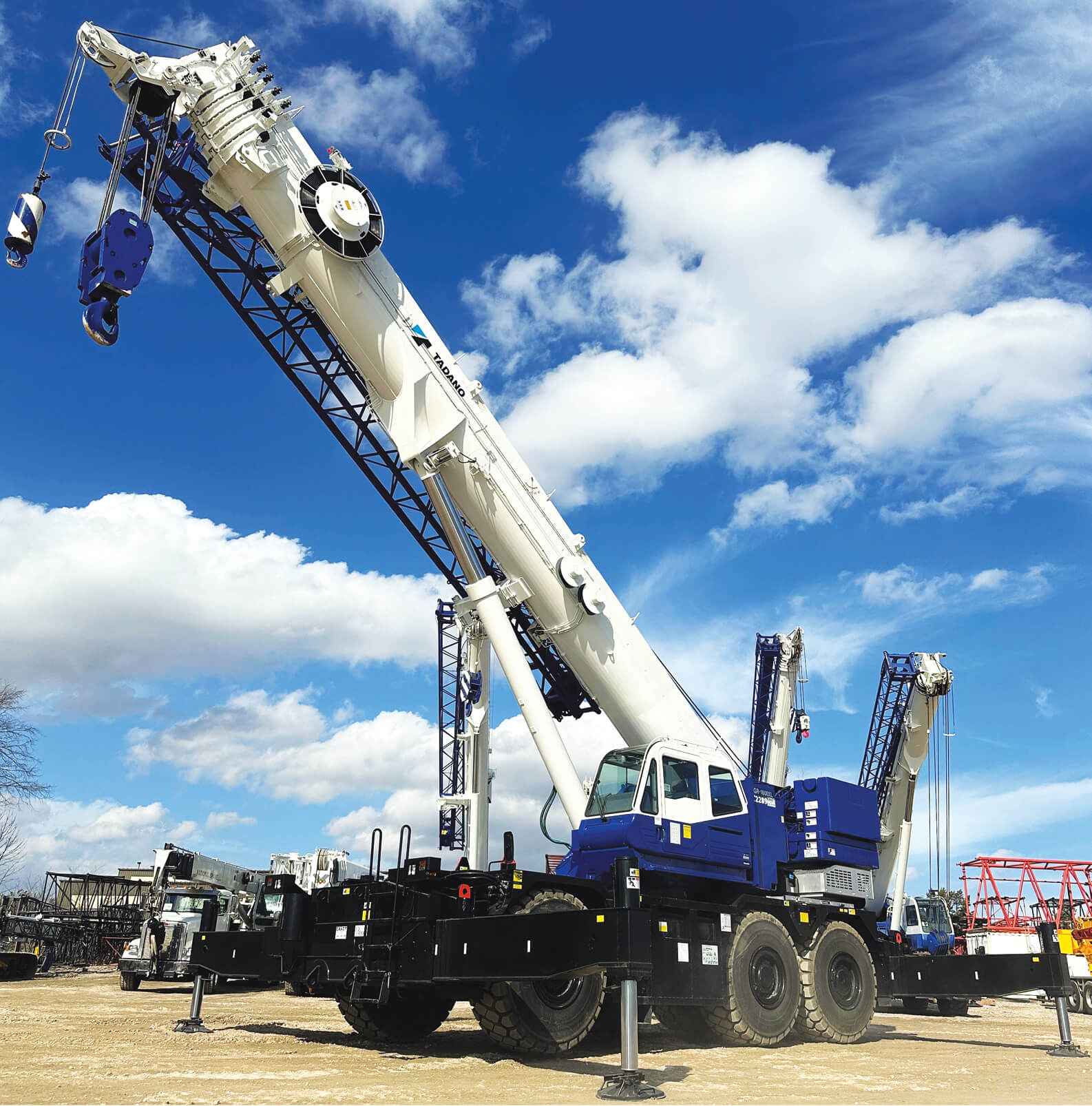
Select Crane’s MacKenzie is also seeing demand for larger rough terrains. “There is great demand for models in the 100- to 160-ton category, boom trucks in the 40- to 60-ton range, crawler cranes of 300 tons or more and both mid-sized and larger all-terrain cranes,” he said. “Versatility, roadability and how often a crane can be out working are driving decisions more than just its capacity.”
MacKenzie added that most U.S. activity is in mid-range cranes. “Those sizes give contractors flexibility to do plant work, bridges, precast and general construction,” he said. “When customers step into a larger all-terrain or crawler, it’s usually for a specific contract or a long-term shift in their work mix, so they are usually looking for long-term rental instead of buying.”
New vs Used
We asked whether the experts noticed any trends in the popularity of new versus used cranes, and how financing differed between them.
“Customers seem to be plenty busy, so new cranes are certainly still on the move,” said Exact Crane’s Swan. “However, inflation and tariffs have affected the crane market. The most desired cranes are lightly used two- to five-year-old machines that beat the tariffs and price increases and have been paid down a bit. Finding those machines that are in good shape and for sale are few and far between.”
Select Crane’s MacKenzie said that late model used cranes continue to be very strong.
“They avoid long lead times, carry a lower price and remove the sting of higher interest rates and tariffs on new equipment,” he said. “Larger fleets and brand-loyal customers still lean toward newer cranes so they can standardize controls, telematics and warranty support, but even they are looking harder at clean, low-hour used units when the numbers make more sense.”
Equify’s Hoiby noted that financing a used crane can be different than financing a new unit.
“New cranes come with predictable values and depreciation, so credit decisions are more straightforward,” he said.
“Used cranes require deeper asset expertise and stronger valuation work. The structure changes, but the goal stays the same: protect cash and keep the operator working.”
Financing Trends
“There are many finance options available in this industry,” said Swan. “Many of them offer similar rates. Newer high-dollar loans might get rates in the range of 5%, but most are still charging 6% to 7% if the borrower has good credit.”
He added that one notable financing trend is customers looking to extend the loan duration from seven years to 10.
MacKenzie said that he’s seeing most buyers use standard equipment finance agreements or lease structures with fixed terms.
“Larger companies typically go through specialized lenders who understand crane values, while smaller owner-operators may still use a local bank,” he said. “We are also seeing an increase in requests for rentals with purchase option (RPO), which we have greatly increased our ability to offer.”
MacKenzie says Select Crane is also seeing more interest in RPOs for larger all terrains.
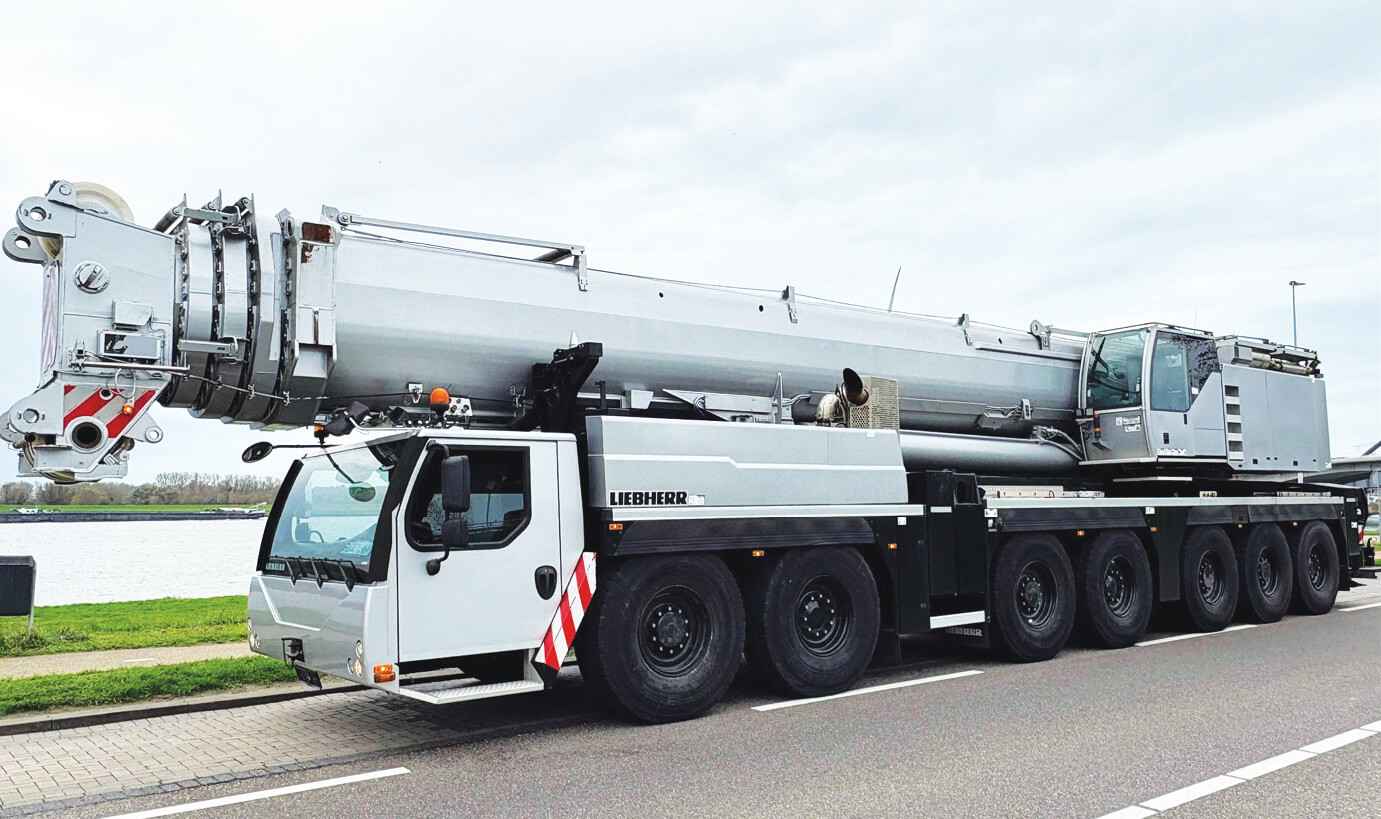
“Some customers want to prove the work volume before they fully commit to buying, especially on big units,” he said. “For example, we currently have RPO available on a 2021 Liebherr LTM 1650-8.1 and a 2018 Liebherr LTM 1400-7.1. It lets a buyer put the crane to work, apply a portion of the rent toward purchase and make a more confident long-term decision.”
Equify’s Hoiby noted that his company is seeing buyers prioritize flexibility and get more value from lenders.
“We specifically see a growing demand for lenders who understand real operating conditions. With banks tightening credit, more operators are turning to independent lenders who can move faster and take real-world factors into account,” he said.
Hoiby added that traditional loans, leases and refinancing are all available.
“Right now, flexible structures are most popular because they align with job cycles, not rigid bank models. Flexibility is winning deals,” he said.
Tips for Buyers and Sellers
Our experts offered valuable advice to anyone looking to buy or sell a crane.
“If you own the equipment take care of it,” said Swan. “You will eventually sell it, and any lack of maintenance will reduce the selling price. Also, if you maintain it properly, you’ll have fewer issues, breakdowns and downtime.”
He added that buyers should go see a crane they want to buy and speak with the operators and mechanics who have worked on it daily.
“Of course, buy from a reputable company so you can be sure the crane has been thoroughly inspected and doesn’t just look nice,” Swan said.
MacKenzie’s tip for buyers is to evaluate their real work mix, not just chase the biggest capacity they can finance.
“Look at the last year or two of jobs and be honest about what you’re doing most,” he said. “Look at typical loads, boom lengths you really use, how far you travel, how often you work in plants, versus on bridges, versus on commercial sites. The right crane is the one that is easy to move and can stay busy on the kinds of work you already have and the jobs you know are coming.”
Equify’s Hoiby suggests that buyers have a clear revenue plan for the machine, understand its resale value and choose a lender who knows crane markets.
“The financing should support uptime and cash flow, not create strain,” he said. “Work with a lender who understands cranes, not just numbers on paper. The right partner helps you structure smarter deals, manage risk and keep projects moving when the market gets tight.”