
Planning for Success
Effective lift plans are a team effort, start long before the actual pick, and cover every aspect of the job
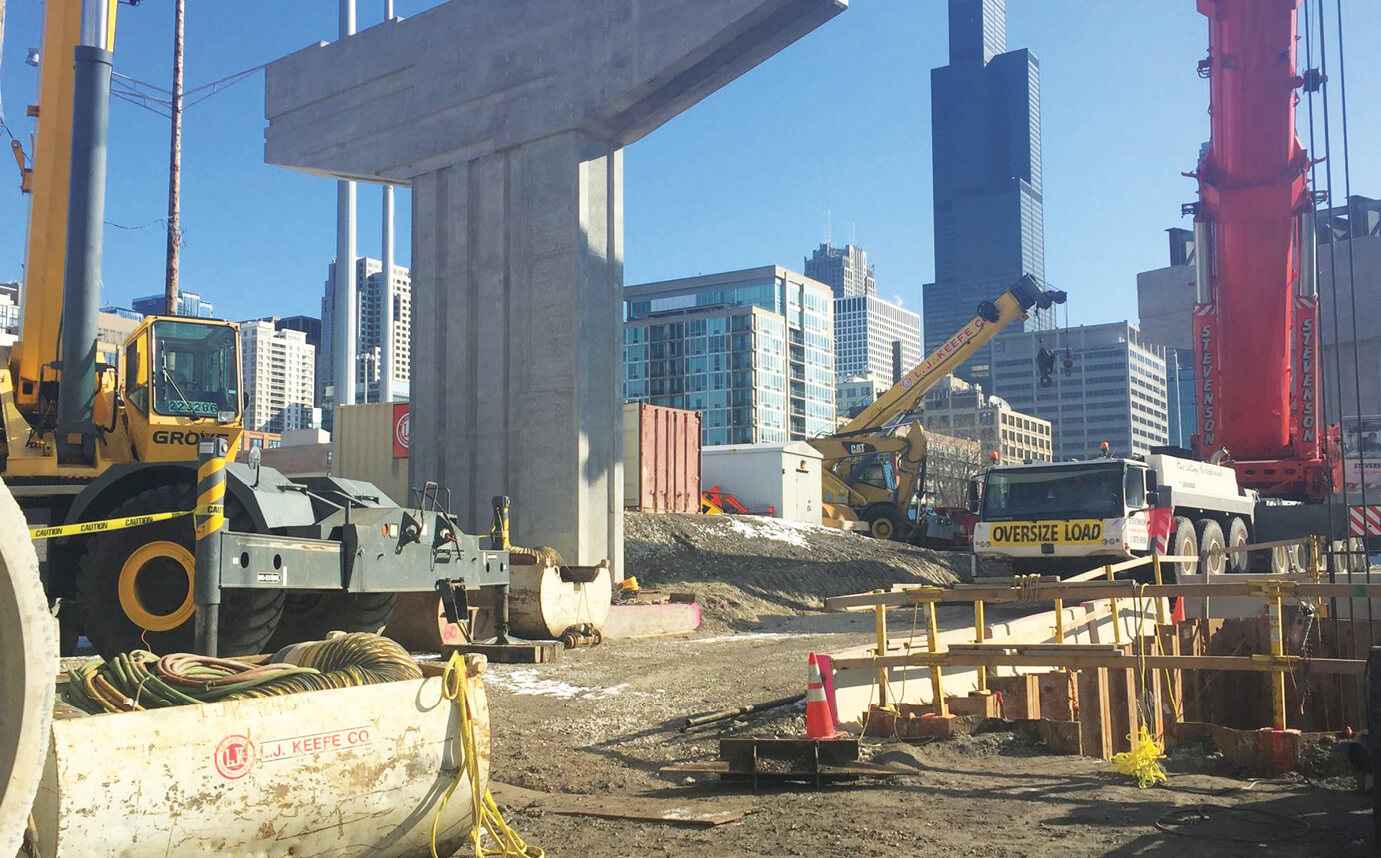
A thorough lift plan resolves potential problems long before the crane and load arrive on site.
To better understand what makes a good lift plan, Crane Hot Line asked two experts who have decades of experience analyzing and engineering complex lifts.
John Engberg, vice president of engineering at Barnhart Crane & Rigging Co., told how to assure that planning, engineering, and communication work together.
Michael Walsh, president of Dearborn Companies, explained specific topics a comprehensive lift plan must address.
Both said a successful plan should start long before the lifting date and must look at factors beyond the load, rigging, and crane.
Connecting Engineering and Execution -- John Engberg
Effective lift planning requires a disciplined process that considers the load, equipment, site conditions, execution methodology, and the people performing the work.
At Barnhart, we emphasize three interconnected elements of successful lifting operations: planning, engineering, and communication.
Each serves a distinct purpose, but their effectiveness depends on how well they work together.
Planning: One of the most common mistakes in lift planning is focusing only on the lift rather than the entire operation.
An effective plan must also evaluate site access, ground conditions, equipment positions, load paths, obstructions, clearances, and the work’s sequence of activities.
The most challenging part of an operation may be getting the equipment into position, navigating a constrained environment, or safely moving a load to its final supports.
Good planning anticipates challenges before they become field problems.
Engineering: Although engineering validates equipment selection, rigging setups, load distribution, structural adequacy, and operational limits, it should not be simply a final check of a completed plan.
Involving engineering early, particularly when operations involve unusual configurations, limited clearances, complex load paths, or uncertain conditions, can reveal ways to improve both safety and efficiency.
The objective is to establish that an operation can be done reliably within the actual working environment.
Communication: Even the most sound lift plan has limited value if the people doing the work do not understand its intent, assumptions, and limitations.
Effective communication ensures that everyone understands their responsibilities, the sequence of operations, critical hold points, and conditions that would require stopping work and reassessing the plan.
Field verification is equally important. Conditions encountered during execution do not always match those anticipated during planning.
When circumstances change, the right response is to evaluate the implications, not improvise around the original plan.
Ultimately, the measure of a successful lift plan is how effectively it translates into safe, predictable execution in the field.
The best lift plans are developed when planners, engineers, and experienced field personnel combine technical rigor with practical execution knowledge.
Plan from the Ground, Up -- Michael T. Walsh
Every good lift plan begins with a site survey, walked by someone accountable for the lift.
The survey should answer five questions:
- Where and how can lift handling equipment (LHE) get in?
- What are the ground conditions?
- How and where can you assemble and disassemble the LHE?
- How and where will every load be delivered, picked, and placed?
- What interferences, such as power lines, structures, and public access, exist?
Those answers let LHE selection, engineering, and lift planning be based on reality.
Site Access: A proper route survey covers more than the last mile.
For every load coming to the site, including LHE, planners should confirm state and local permits, limits of any bridges and culverts, overhead clearances, signal arms, utility drops, rail crossings, pipe racks, and plant gate clearances, as well as the turning geometry of the longest trailer at every tight corner.
It’s also important to know who holds the key to the site at any time of day or night.
On new construction sites, the on-site haul route matters as much as the public routes to the site.
Haul roads may be rated for delivery trucks and counterweight loads, but not 400,000-pound transformers.
Buried utilities, manholes and utility vaults, trench crossings, and culverts along the route all need the same scrutiny as the crane pad.
Sequencing and timing are part of access.
The lift planner should own the delivery schedule or at least sign off on it.
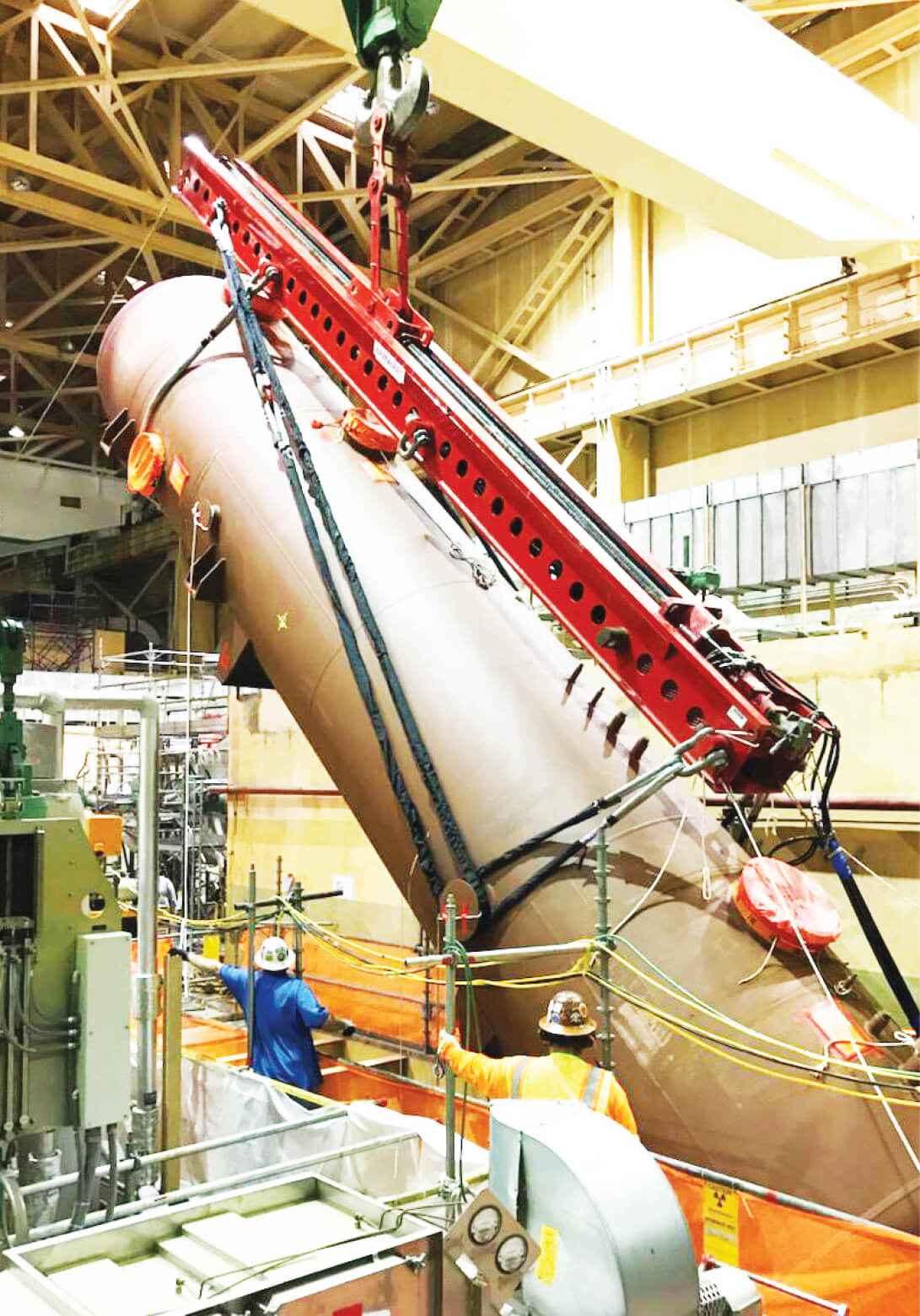
A lift plan should address unique aspects of the site and lift, for example getting a feedwater heater through a just-large-enough hatch, and should be clearly understood by everyone involved. (Photo courtesy of Barnhart Crane & Rigging Co.)
Ground bearing: OSHA requires the site’s “controlling entity” to ensure the ground is firm, drained, and graded to safely support the LHE and related materials.
The controlling entity also must tell the user of LHE and assist equipment about known hazards beneath the setup area.
The planner must know the maximum (worst case) outrigger or track force for the planned LHE in order to determine the bearing area of crane mats or outrigger pads. In many cases, it comes with no load on the hook and the boom at its highest angle.
The planner must also know the ground’s bearing capacity in order to make sure it can support the LHE’s distributed reaction force.
Site Logistics: Plan the space, not just the lift. Planning of site logistics must include delivery of all loads (including LHE), LHE assembly, the lift itself, disassembly, and demobilization.
Assembly/disassembly space is the factor most often overlooked.
Adequate boom laydown and counterweight loading areas are usually top of mind, but space for assist cranes (including their build and disassembly) is overlooked.
Load delivery (lift radius position and load orientation) require thorough consideration. Every extra foot of radius eats capacity, and every extra repositioning costs time.
Exclusion zones: OSHA requires barricading of the counterweight swing area where workers could be struck.
When you add the load path, the fall zone, and any area under suspended loads, a site can become really tight.
Power lines, pipe bridges: Equipment within 20 feet of lines up to 350 kilovolts need specific protections, and higher voltages need even larger clearances.
Avoid overhead conductors and other overhead obstructions, and plan for the boom’s full range of motion, not just its working position.
Other cranes and trades: Tower cranes, other mobile cranes, and concrete pumps need anti-collision planning, and other trades need to know when their access is closed.
Protect your real estate: Claim your operating space and hold it. Jobsites are highly dynamic and open space doesn’t last long.
People and the pre-lift meeting: The pre-lift meeting is where the “ground-up” plan meets reality.
Walk it as a team, don’t simply read it.
Start at the gate. Walk the route in. Stand at the crane pad. Check the ground conditions and mat/outrigger locations.
Check for potential overhead interferences.
Confirm that exclusion zones are in place.
Make sure everyone understands communication methods and stop-work triggers.
Verify the load weight.
No matter what, when site conditions differ from the plan, make sure the LHE and load do not move until the revised plan is agreed upon.
The last word: LHE capacity is rarely what stops a heavy lift.
Lack of planning to ensure clear access, adequate operating space, and good ground conditions are the primary culprits.
Planners who get those right typically start with the gate, the road in, and the dirt — planning from the ground up.